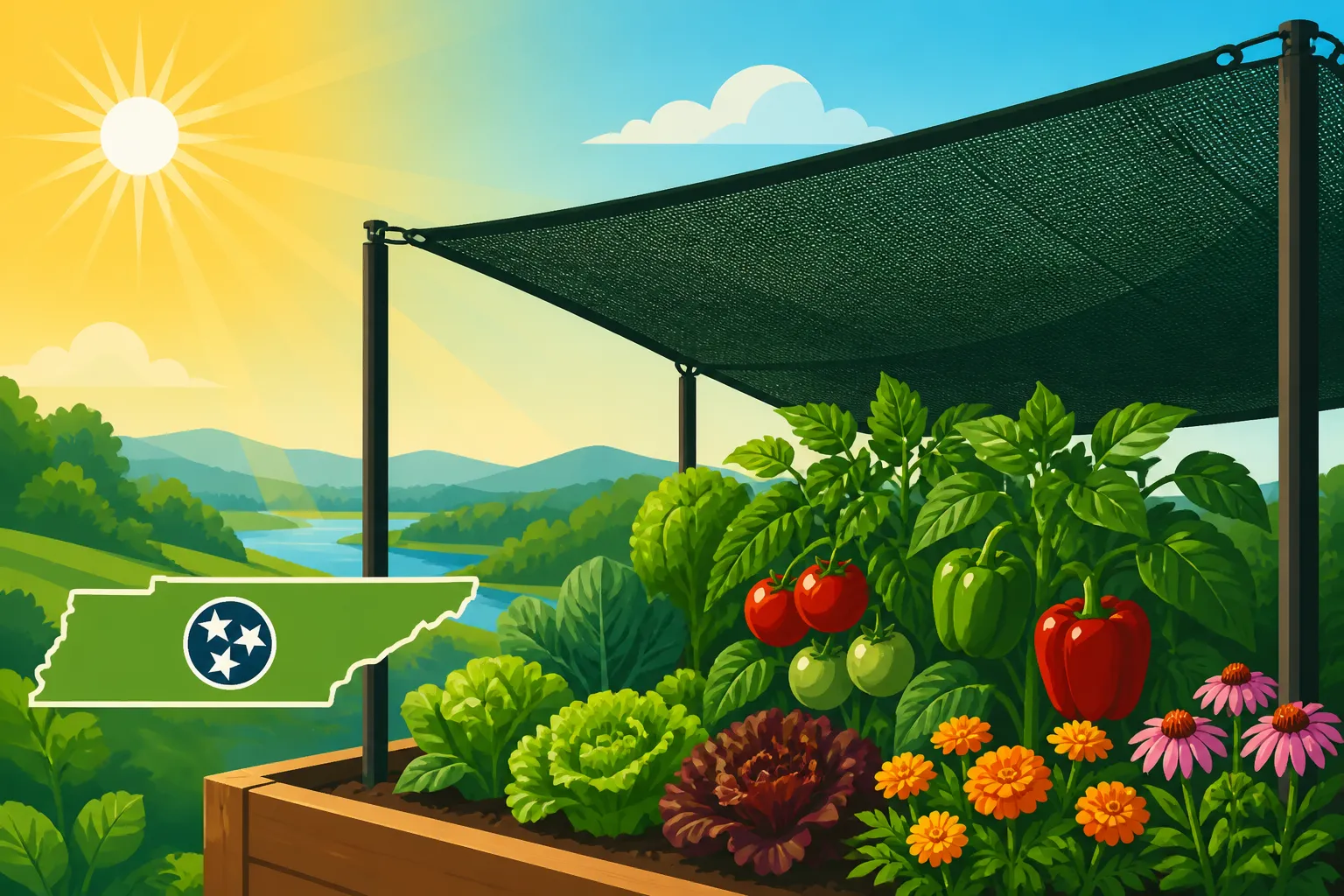
Using Garden Shade Cloth Against Scorching Summer Sun
Scorching summer sun can leave Tennessee vegetables wilted, scorched, or slow to set fruit, even when the soil is moist. Shade cloth can take the edge off intense sunlight, but the wrong density or a poorly ventilated setup can cause new problems. Here’s how to choose, install, and manage a shade structure that protects crops without keeping them too cool or dark.
What shade cloth can and cannot do
Shade cloth is a woven or knitted covering designed to block some sunlight while allowing air to pass through. Its main job in a vegetable garden is to reduce the amount of direct solar energy reaching leaves and fruit. That can help limit sunscald, leaf scorch, and heat stress during punishing afternoon conditions.
The shade it provides is not the same as air-conditioning. A covered bed may feel less exposed, but the biggest benefit is often that plant surfaces and soil receive less direct radiation. Air temperature may not drop dramatically, especially when the cloth sits close to the plants or blocks airflow. If roots are dry, a shade canopy will not fix the underlying watering problem.
Shade cloth is also different from a solid tarp or plastic sheet. A solid cover can trap hot air and block rain, while breathable shade cloth allows more air movement. Even so, cloth needs to be held above the crop with open sides or generous ventilation. A low, tight cover can still create a hot, stagnant pocket.
Think of shade as one tool in a broader heat plan. Consistent soil moisture, mulch, suitable planting timing, and healthy roots all matter. For a broader overview of seasonal heat protection, see Protecting Tennessee Gardens in Peak Summer: Heat Stress Solutions. If a plant wilts because its root zone is dry, watering remains the first priority; Watering Your Tennessee Garden: Weekly Amounts and Timing covers how to assess garden moisture.
Shade cloth is most useful when a bed has a predictable period of punishing sun or when a short spell of extreme heat is stressing tender plants. It is less useful as a permanent cover over every crop. Many fruiting vegetables need abundant light to grow and produce well, and too much shade can reduce flowering, fruit set, or harvest. The goal is not to make the garden cool. It is to reduce the harshest exposure while retaining enough light and airflow for growth.
Signs that a crop may benefit
A few symptoms can point toward excessive sun or heat:
- Pale, tan, or papery patches on exposed leaves or fruit may indicate sunscald or leaf scorch.
- Plants may wilt in the hottest part of the afternoon even when the soil is not completely dry. If they recover later, heat stress is one possibility, though wilting can also signal inadequate water or root trouble.
- Blossoms may drop or fruit may stop setting during hot spells. Shade can reduce direct exposure, but it cannot reliably overcome heat that is already disrupting flowering.
- Lettuce and other cool-season greens may turn bitter, bolt, or become difficult to keep productive as temperatures rise. Shade can extend their usefulness, but it will not make summer conditions equivalent to spring.
- Newly transplanted seedlings may struggle to establish when sudden strong sun adds to transplant stress.
Symptoms alone do not prove that sunlight is the cause. Check soil moisture, drainage, pests, and plant health before adding a cover. If a plant’s needs are uncertain, compare its condition in a shaded area with a similar plant in full sun rather than changing the whole garden at once.
Choose a shade level that fits the crop
Shade cloth is commonly sold by its shade rating, which describes the share of incoming sunlight the material is designed to block. A higher rating blocks more light; it does not mean the cloth cools the bed by that percentage. Actual conditions depend on the cloth, its position, the time of day, surrounding buildings or trees, and airflow.
For a mixed vegetable bed, a moderate shade level is often a sensible starting point for short-term protection. Lighter shade can soften harsh sun while leaving more light available to fruiting crops. Heavier shade may be appropriate for particularly sensitive greens or temporary protection during an intense heat spell, but it can be excessive for tomatoes, peppers, squash, or other crops that need strong light to produce well. Check the supplier’s current product description and consider testing a small area before covering a large bed.
| Shade level | General effect | Potential fit | Main trade-off |
|---|---|---|---|
| Light shade | Blocks a smaller share of direct sunlight | A mixed bed that needs modest relief while retaining strong light | May not be enough for very sensitive crops in severe exposure |
| Moderate shade | Offers a balance between relief and light access | Temporary cover over mixed vegetables or afternoon protection | Can still reduce flowering and yield if left on too long |
| Heavy shade | Blocks substantially more sunlight | Short-term protection for sensitive plants or seedlings during extreme exposure | Greater risk of weak growth, delayed production, or poor fruiting |
These categories are relative, not fixed recommendations for every crop or garden. The shade rating alone cannot account for how many hours of sun a bed receives or whether the cloth covers morning sun, afternoon sun, or both. A bed with morning light and afternoon shade may need less additional cover than one exposed to direct sun through the hottest part of the day.
Match the cover to the crop
Leafy crops such as lettuce and some herbs can benefit from more shade than sun-loving fruiting vegetables. If a summer bed is being used to keep greens going, a somewhat heavier cover may be worth trying. Expect their growth to be slower than in bright spring conditions, and watch for signs that the bed has become too dim.
Tomatoes, peppers, cucumbers, beans, and squash generally need ample light for strong growth and production. They may still benefit from light or moderate shade during the hottest part of the day, especially if fruit is exposed and at risk of sunscald. But a dense cover left over the whole bed can make the plants less productive. If you are protecting only a row or a small group of plants, cover that area rather than shading every nearby crop.
Seedlings and recent transplants can be particularly vulnerable to a sudden change from a protected indoor or nursery environment to strong outdoor sun. Temporary light shade can help them adjust, but it should be part of a gradual transition, not a permanent substitute for hardening off. See Hardening Seedlings to Protect Against Late Spring Freezes for the general process of preparing seedlings for outdoor conditions; the same gradual approach to exposure is useful when managing bright sun, though summer heat calls for extra attention to moisture and ventilation.
Before buying cloth, consider whether your main problem is too much sun or whether the crop is simply out of season. Heat-sensitive vegetables may not produce well in peak summer even under shade. Timing Vegetable Crops to Dodge Peak Tennessee Summer Heat explains why crop timing can sometimes be a better solution than trying to shield a plant through unfavorable weather.
Install the cloth for airflow and useful shade
A good cover is high enough to let air move freely and secure enough to stay in place. It should not rest on leaves, fruit, or tender stems. Contact can cause abrasion, restrict airflow, and leave the plants pressed against a hot surface. A simple frame made from sturdy posts, hoops, or another garden structure can hold the cloth above the crop. Choose a setup that suits the bed size and can be inspected and adjusted easily.
The sides do not have to be sealed. In many home gardens, open sides help prevent heat from building up beneath the covering. If a frame has solid sides, small openings, or tightly fastened panels, pay close attention to temperatures and airflow. Shade cloth is designed to breathe, but its placement can still limit ventilation.
Decide what time of day needs protection
Observe the bed before choosing where to place the cloth. Note when direct sunlight reaches it and when leaves begin to show stress. If the main trouble comes from late-day sun, arrange the cover to reduce that exposure while preserving more morning light. If a crop is under intense sun for most of the day, a broader overhead canopy may be appropriate, but use a lighter shade rating or a limited trial first.
An overhead cover should be positioned so rain can still reach the bed where possible, and so water does not collect on the material. Shade cloth is not a substitute for a rain cover. A strong, continuous canopy can intercept some rainfall, and the amount reaching the soil depends on how it is installed. Check the bed after rain rather than assuming it has received enough water.
Keep the structure clear of electrical lines and other hazards, and secure it against wind. A large piece of cloth can catch gusts, pull on supports, or collapse onto plants. Use sound supports and fastenings appropriate to the size of the cover, inspect them after windy weather, and take the cloth down if the structure cannot remain safely anchored. Do not rely on light garden stakes for a broad, taut canopy.
A removable or adjustable setup is often more useful than a permanent roof. It lets you uncover crops when the weather eases, expose flowers to pollinators, and make changes if plants begin stretching or producing poorly. Clips or other removable fasteners can make adjustments easier, but the finished arrangement still needs to be stable.
Make a small test before shading a whole bed
If the right shade level is unclear, start with one row or part of a bed. Cover a section and compare it with a similar uncovered section over several days. Look at the plants in the morning and afternoon. Check for leaf damage, wilting, flowering, fruit set, and soil moisture. A small trial helps reveal whether the cover is solving the problem or simply reducing needed light.
Keep the comparison as fair as possible: use similar plants, similar soil, and similar watering. If the shaded plants look more vigorous but produce less, the cover may be too dense or on for too much of the day. If both covered and uncovered plants wilt, check water and roots before changing the cloth.
Use shade strategically through the summer
Tennessee gardens can experience intense summer sun, but a single calendar date is not a reliable signal to cover or uncover beds. Weather shifts, local exposure, elevation, and the garden’s microclimate all affect what plants experience. Treat shade as a response to conditions: use it when the plants or forecast suggest a need, then reassess as conditions change.
During a heat spell, install shade before plants show severe damage if practical. A cover may reduce further exposure, but it cannot reverse scorched leaves or restore already damaged fruit. Continue checking the garden; the cloth is not a set-and-forget fix. If the heat passes, remove or adjust it so crops receive enough light.
For cool-season greens, summer shade can sometimes extend harvest by reducing intense exposure. It cannot prevent all bolting or heat-related bitterness. Succession sowing and choosing the right season remain important. Tennessee June Garden Tasks: Succession Sowing and Summer Mulch and Tennessee Vegetable Planting Calendars: Adjusting for Region can help with planning around seasonal changes.
For fruiting vegetables, think first about what needs protection. If leaves are healthy but exposed fruit is getting sunscald, a limited canopy over the affected area may be more appropriate than a dense cover over the entire plant. Make sure the shade does not prevent bees and other pollinators from reaching flowers. An open-sided structure usually allows access, but a cover that is too low or crowded can interfere with plant growth and garden work.
Keep moisture and mulch in the plan
Shade reduces direct sun on the soil, but the bed can still dry quickly during hot, windy weather. Check moisture near the root zone rather than judging only by the surface. Soil under mulch may stay moist longer than bare soil, so inspect before watering instead of following a fixed schedule.
Mulch can moderate soil temperature and slow evaporation. Apply it without piling it against stems, and make sure the bed drains adequately. A wet, poorly drained root zone is not improved by adding more water simply because the leaves wilt in afternoon heat. For raised beds or heavy soils, irrigation needs can differ; How Soil Types and Raised Beds Affect Home Garden Irrigation explains why the growing medium matters.
Shade and watering work together but do different jobs. Shade reduces radiation; irrigation supplies water to roots. If a plant wilts, feel the soil at root depth. If it is dry, water appropriately and reassess. If it is already moist, look for heat stress, root damage, disease, or other causes rather than adding water automatically. Adjusting Garden Watering in Hot, Windy Tennessee Weather offers more detail on checking needs as conditions shift.
Avoid common problems and know when to adjust
Too much shade is one of the most common ways a well-intended cover can undermine a garden. Plants may grow tall and weak as they reach for light, flowering and fruiting can decline, and wet leaves may dry more slowly if airflow is poor. These signs call for a change: lift the cloth, switch to a lighter material, cover for fewer hours, or remove it when the intense conditions pass.
Other problems often come from installation or from assuming the cover solves every heat issue:
- Cloth touching plants: Raise it so leaves and fruit have room to grow without rubbing against the material.
- A closed-in structure: Open the sides or raise the canopy to improve air movement.
- Covering the bed continuously: Remove or reduce shade when conditions improve, especially for crops that need strong light.
- Watering by appearance alone: Check the root zone. Afternoon wilt can have more than one cause.
- Shading flowers without considering pollinators: Keep access open and avoid enclosing flowering crops unnecessarily.
- Ignoring wind: Inspect supports and fasteners regularly, especially after gusty weather.
- Using a solid tarp as a substitute: A non-breathable cover can trap heat and block rain; use a material intended to provide breathable shade.
Shade cloth does not prevent every insect, disease, or heat-related issue. A cover may also make it harder to spot problems if plants are hidden. Lift or walk around the structure regularly to inspect leaves, stems, flowers, and the soil. If the crop is not improving, remove the cover temporarily and reassess what is happening.
A simple adjustment routine helps:
- Check the forecast and observe the bed’s sun exposure.
- Inspect plants for scorch, wilting, poor flowering, or weak growth.
- Feel the soil at root depth and address moisture needs separately.
- Adjust the cloth’s density, position, or hours of use.
- Recheck the plants after the change, including how well air moves through the structure.
Keep notes about which beds benefit and when. A sunny, exposed raised bed may need a different approach from a bed shaded by trees in the afternoon. If a cover consistently reduces yield without preventing visible stress, it may not be the right solution for that crop or site.
In many cases, the best approach combines several modest measures rather than relying on a heavy shade canopy: choose season-appropriate crops, water based on soil conditions, mulch where suitable, and protect only the plants or hours that need it. Shade cloth is most effective when it is a targeted tool, not a permanent roof over the whole garden.
Frequently Asked Questions
What shade cloth percentage should I use for vegetables?
There is no single percentage that works for every vegetable bed. A lighter or moderate shade level is a reasonable starting point for many mixed beds, while sensitive leafy crops may tolerate more shade than fruiting crops. Test a small area and watch both plant stress and production before covering a larger space.
Can shade cloth stop tomatoes from getting sunscald?
It can reduce direct exposure and may help protect exposed fruit, but it does not guarantee that sunscald will stop. Consider shading the affected plants or fruiting area without blocking more light than necessary, and keep the structure well ventilated.
Should shade cloth stay over the garden all summer?
Not automatically. Conditions and crop needs change. Remove or adjust the cloth when intense exposure eases, and be alert for weak, stretched growth or reduced flowering and fruiting.
Does shade cloth mean I can water less?
Not necessarily. It can reduce direct sun on the soil, but the garden may still dry quickly in hot, windy weather. Check moisture near the roots and water according to what the soil and plants need.
Disclaimer
This article is for general informational purposes only and does not constitute professional advice. Laws, prices and regulations vary by location and change over time. Consult a qualified professional for guidance on your specific situation. Tennessee Gardening Guide is not a government agency and is not affiliated with any university extension, state department of agriculture or other government agency.