Tennessee Hardiness Zones: Understanding Warm-Season Bands
A hardiness zone can help you judge whether a perennial plant is likely to cope with winter, but it cannot tell you when to sow vegetables or set out tender starts. Tennessee gardeners need to separate winter hardiness from seasonal planting time. This guide explains how to use warm-season bands as one planning tool, then pair them with frost timing, local conditions, and the needs of each crop.
What hardiness zones tell you
A hardiness zone is a broad way to compare places by their usual winter cold. For gardeners, it can help with a basic question: is a perennial plant likely to survive winter outdoors in this area? That makes a zone useful when choosing long-lived plants that remain in the ground from year to year.
A zone is not a planting calendar. It does not tell you when soil will be warm enough for a particular vegetable, when a spring frost is likely to pass, or how long your growing season will last. It also cannot predict the weather in a particular year. A suitable winter zone is a helpful starting point, not a promise that a plant will thrive.
This distinction matters because gardeners often see a warm-looking zone on a map and assume that it means early planting is safe. But a plant’s ability to survive winter is different from its ability to withstand a late cold snap in spring. Tender vegetables, annual flowers, and young transplants can be damaged by cold even when a perennial plant suited to the area would survive the winter.
Hardiness zones also describe an area rather than every garden bed within it. A map cannot capture every difference in elevation, exposure, drainage, wind, shade, or nearby buildings. A sheltered bed beside a wall may behave differently from an exposed bed on open ground, even if both are in the same mapped area. Use a zone to narrow your choices, then assess the place where you will actually grow the plant.
The most useful way to read a zone is as one part of a decision:
- For a perennial, compare its winter suitability with the mapped zone where your garden falls.
- For a vegetable, use a crop calendar and frost information to plan sowing and transplanting.
- For a site with unusual exposure or drainage, consider those conditions before choosing the plant.
- For a plant that is close to the edge of its recommended range, consider whether you can provide a more protected spot.
For help identifying the mapped zone associated with your location, see Looking Up Your Tennessee Planting Zone and Microclimate. To compare the broader idea of mapped zones with local differences, see How Tennessee Hardiness Zones Vary Across Town Borders.
Thinking in terms of separate tools prevents a common planning mistake: asking one map to answer every gardening question. A zone map can guide winter suitability. Frost information can help you think about cold risk during the growing season. A planting calendar can help organize sowing and transplanting. Your garden’s actual soil, light, drainage, and exposure help determine whether the plan is practical.
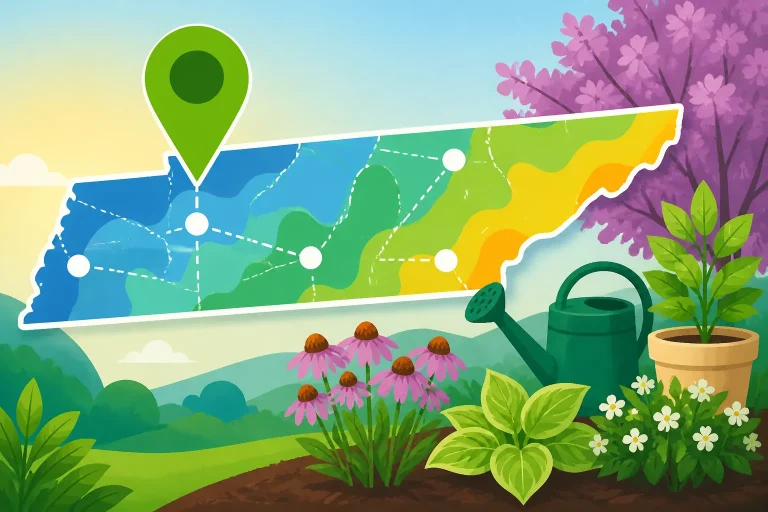
Tennessee’s warm-season bands and statewide variation
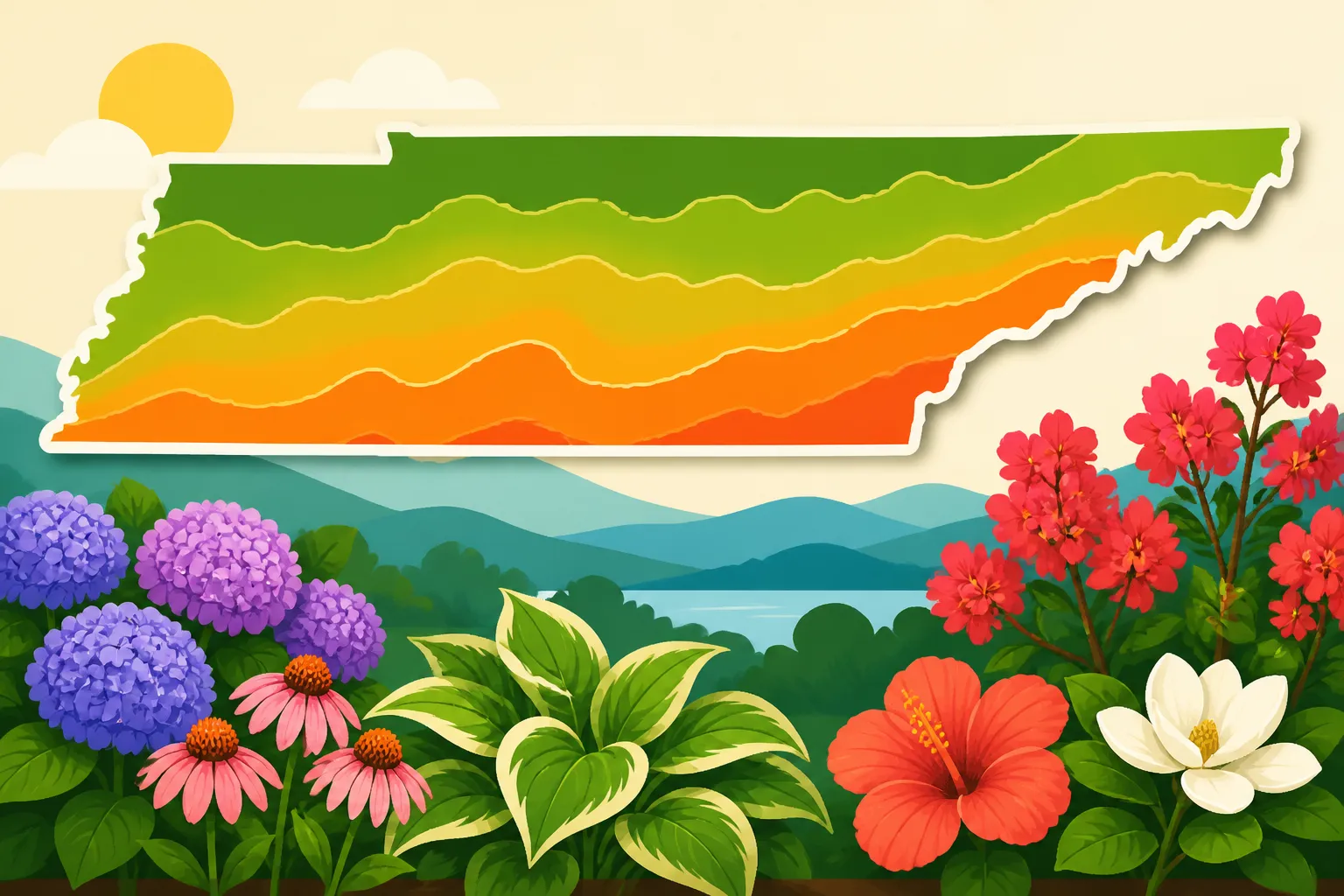
According to Tennessee Department of Agriculture, the zones listed for Tennessee are 5b, 6a, 6b, 7a, 7b, and 8a.
That range is a reminder that Tennessee gardening is not governed by a single statewide pattern. A recommendation that is a reasonable starting point in one part of the state may need adjusting elsewhere. Even where a map shows a warmer band, the label alone does not account for the conditions in a specific yard.
“Warm-season bands” can be a useful way to think about parts of the state with milder winter conditions, but the phrase should not be treated as a planting instruction. A warmer mapped band may affect which perennial plants are worth considering. It does not tell you when to plant tomatoes, beans, squash, or other heat-loving crops outdoors. Their planting time still depends on spring weather, the crop’s sensitivity to cold, and local growing conditions.
The reverse is true, too. A cooler mapped band does not mean a garden cannot grow warm-season crops. It may mean that timing and variety selection deserve more attention, or that a gardener needs to focus on a suitable growing window. A map label is a way to compare winter conditions, not a verdict on what a garden can produce.
The state’s variation also makes statewide planting advice easier to misuse. A calendar that presents one date as right for every Tennessee garden can create false confidence. Gardeners should look for recommendations that account for regional differences and then check how those recommendations fit their own site. Tennessee Vegetable Planting Calendars: Adjusting for Region is a useful next step when a general schedule needs local adjustment.
It helps to ask what kind of decision you are making:
- If the question is whether a perennial can survive winter, the hardiness zone is relevant.
- If the question is when to start seeds, the zone is not enough.
- If the question is whether a young plant can handle a cold night, the current forecast and the plant’s sensitivity matter.
- If the question is whether a crop has enough time to produce, consider its growing needs and the length of your local season.
These distinctions can sound small, but they change how a planting plan works. A gardener who uses a warm-zone label as a signal to plant everything early may expose tender crops to cold. A gardener who treats the zone as irrelevant may overlook useful information when choosing shrubs, perennials, or other plants expected to remain outdoors through winter.
A practical approach is to read the map broadly and the garden closely. Use the mapped band to narrow options, then consider what the plant needs and how your specific site behaves. If a plant is not suited to the area’s winter conditions, a protected microclimate may or may not be enough to make it a dependable choice. If the plant is suited to the zone, it may still need appropriate soil, light, water, and care.
Why a warm zone does not set a planting date
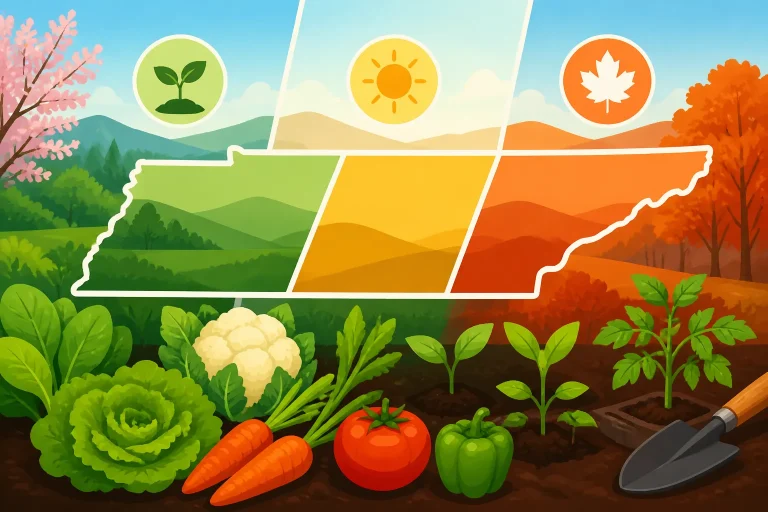
A hardiness zone and a planting date answer different questions. The zone gives a broad indication of winter cold. A planting date is a seasonal decision based on when a crop can be sown or planted with an acceptable level of risk. That decision can depend on frost, soil warmth, weather swings, crop sensitivity, and whether you are sowing seed outdoors or transplanting a young plant.
This is especially important for warm-season vegetables. Their name describes the conditions they generally need for growth; it does not mean they can safely go outdoors as soon as the weather feels mild. A warm spell can be followed by cold weather. Soil can also remain cool after a sunny afternoon, and a seedling raised indoors may be less prepared for sudden outdoor conditions than an established plant.
Consider the difference between these questions:
- “Can this perennial tolerate the winter conditions associated with my area?”
- “Is this week a suitable time to sow or transplant this crop?”
- “Is the soil ready for direct sowing?”
- “Can this tender plant cope with the forecast conditions?”
- “Will there be enough growing time for this crop to mature?”
A hardiness zone helps most with the first question. It cannot answer the others on its own. For timing tender crops, start with When to Plant Warm-Season Vegetables Outdoors and Tennessee Frost Dates: Spring and Fall Freeze Timelines. For a wider look at sowing and transplanting across the year, use Tennessee Planting Guide: What Vegetables to Sow Each Month.
A calendar is still a planning aid rather than a guarantee. Frost dates are estimates, not promises about what will happen in an individual garden. Local conditions can shift the practical window. A low-lying spot, exposed bed, or cold pocket may behave differently from a protected area nearby. For that reason, it is wise to combine calendar guidance with current forecasts and the characteristics of the bed.
Soil temperature and air temperature are related but not interchangeable. A warm afternoon does not necessarily mean the soil is ready for seeds that need warmer conditions. Raised beds, containers, shaded ground, and heavy or poorly drained soil may warm and cool differently. If direct sowing, consider whether the soil is suitable for the crop, not only whether the afternoon feels pleasant.
Transplants need their own judgment. A plant raised indoors may be tender and unaccustomed to outdoor sun, wind, and changing temperatures. Gradually preparing it for outdoor conditions can make the transition less abrupt, but hardening off does not remove the risk of unsuitable weather. It is one part of transplant readiness, not a substitute for timing.
A useful mental model is to keep three questions separate:
| Planning question | Useful tool | What it does not decide |
|---|---|---|
| Is a perennial likely to tolerate winter? | Hardiness-zone information | Whether a specific site has ideal soil or drainage |
| When should a crop be sown or planted? | A regional planting calendar | The exact weather in your garden |
| Is it safe to plant right now? | Current conditions, forecast, and crop sensitivity | Whether the plant will thrive for the whole season |
The table is not a strict sequence. You may move between these questions as you plan. For example, you might first choose a perennial that suits your general winter conditions, then reconsider it because the intended bed stays wet. Or you might select a vegetable that fits your planting window, then delay sowing because the soil is still cool.
The key is not to ask a zone map to do the work of a crop calendar. Warm-season bands are useful context. Local planting decisions need local timing.
How to use a zone when choosing plants
When you choose long-lived plants, a zone can narrow the field before you compare other needs. This is useful for perennials, shrubs, and trees because they must cope with conditions outdoors over time, including winter. Start by checking whether a plant is considered suitable for the general winter conditions in your area, then look beyond the zone label.
A plant that matches a zone is not automatically a good choice for every bed. It may need full sun, well-drained ground, or consistent moisture. A plant may also struggle in a spot that is exposed to wind or holds water after rain. The growing site matters as much as the general map category.
Use a practical selection sequence:
- Check winter suitability. Use the zone as an initial filter for plants that remain outdoors year-round.
- Check the plant’s growing needs. Consider light, soil, drainage, and moisture rather than relying on winter suitability alone.
- Match the plant to the bed. A plant suited to the broad region may still be a poor fit for a shaded, wet, or exposed location.
- Consider establishment. A recently planted specimen may need more attention than an established one, especially while its roots are settling into the site.
- Look for local guidance. If a plant is near the edge of its recommended range or has specific requirements, seek advice that reflects Tennessee conditions.
For vegetables, the decision is different. Many are grown as annual crops rather than expected to survive winter outdoors. Their success depends more on seasonal timing, soil conditions, and the length of the growing window than on winter suitability. A hardiness zone might help describe the broader climate, but it should not be the main tool for deciding when to plant vegetables.
This is where plant categories can become confusing. A garden may include a perennial herb, a tender annual herb, and a vegetable crop in nearby beds. The perennial herb may need winter-suitability guidance. The annual herb may need a safe outdoor planting window. The vegetable may need a crop-specific sowing schedule. Treating all three as the same kind of decision can lead to poor timing.
Also consider how you plan to use the plant. A perennial that survives winter but grows poorly in the selected location may be less useful than another choice that fits the soil and light. A vegetable planted at a suitable time may still fail if its bed is shaded or drains poorly. Zones are not a rating of overall plant performance; they address only part of the environment.
When a plant label or catalogue gives a hardiness range, use it as a screening clue rather than a guarantee. Product descriptions can be simplified, and the conditions in your garden may differ from those assumed by the label. If the plant is valuable, difficult to replace, or close to its cold tolerance, investigate further before buying or planting. That can save the cost and work of replacing a plant that was never well suited to the site.
For vegetables, build from crop-specific timing instead. Tennessee Planting Calendar: Monthly Sowing and Harvest Dates can help you organize seasonal tasks, while Cool-Season vs Warm-Season Crops: Sowing Windows for Tennessee helps distinguish crops with different temperature needs. Pair that information with the weather and the condition of your own beds.
Read your microclimate as well as the map
A statewide zone map cannot describe every yard. The immediate surroundings of a bed can create a microclimate: a small area that is warmer, cooler, windier, shadier, or wetter than nearby ground. These differences matter because plants respond to the conditions they experience, not to the color of a broad area on a map.
Look at the garden through the seasons. Notice where cold air seems to collect, where wind is strongest, and which beds get early or late sun. Pay attention to places next to buildings, fences, paved areas, tree canopies, slopes, and low ground. These features can influence warmth, exposure, and drainage, but their effects vary. A wall may offer shelter in one situation and create excessive heat or shade in another.
Keep simple observations rather than assuming a spot is protected. Ask:
- Does the bed warm earlier than the rest of the garden?
- Does it stay cool or shaded when nearby areas receive sun?
- Does wind reach the bed directly?
- Does water drain away, or does the ground stay wet after rain?
- Does the site differ noticeably from another bed in the same yard?
These observations are useful for both perennial selection and seasonal planting. A sheltered bed may be a better place for a plant that benefits from protection, but it does not make a tender crop immune to a cold snap. A sunny area may warm earlier, but it can also dry out faster. A low place may be convenient for watering, yet be more vulnerable to cold air or standing water. The point is to identify the actual trade-offs.
Microclimate can also explain why a neighbor’s planting schedule does not match yours. Two gardens can fall within the same broad mapped region and still differ in sun, slope, drainage, exposure, and ground cover. A calendar written for a region gives a useful starting point, but observing your own beds helps you decide whether a recommendation fits.
For more guidance on locating your planting zone while considering site-level conditions, see Finding Your Tennessee Hardiness Zone by Local ZIP Code. A ZIP code can help orient you to a general map area, but it should not be treated as a precise description of a particular garden bed.
A short garden record can improve decisions over time. Note when beds become workable, when the soil seems warm enough for planned crops, where frost damage appears, and which areas remain wet or dry. These notes do not replace forecasts or local guidance. They help you recognize patterns in your own yard and avoid repeating a poor placement or timing choice.
Microclimates are useful to work with, not a reason to ignore risk. A protected corner might extend the practical season for some plants, but conditions can change from year to year. A cold snap may affect a sheltered site, and a warm spring does not guarantee that cold weather is finished. Make decisions based on both the broad regional information and the conditions at the time.
Build a planting calendar that uses zones correctly
A useful planting calendar brings together different kinds of information instead of treating the zone as a calendar date. Start with the crops or plants you want to grow, then decide what information each one needs. A perennial needs winter-suitability guidance. A cool-season vegetable needs a suitable seasonal window. A warm-season crop needs a window that accounts for its sensitivity to cold and its need for warmer conditions.
A practical planning process can stay flexible:
- Make a crop list. Separate perennial plants from annual vegetables, herbs, and flowers.
- Check the right type of guidance. Use zone information for winter suitability and crop calendars for sowing and transplanting.
- Adjust for your region. Favor calendars that recognize differences across Tennessee rather than assuming one statewide schedule fits every garden.
- Consider the bed. Account for sunlight, drainage, exposure, and whether the soil is workable and suitable.
- Watch conditions. Use current forecasts and the needs of each crop before acting on a calendar window.
- Review what happened. Record successful timings and problem spots so future plans can be more site-specific.
This approach is more dependable than trying to derive planting dates from a zone number. It also makes the plan easier to update. If a spring stays cold, you can delay a tender crop without needing to reconsider the plant’s winter suitability. If a perennial struggles because the site stays wet, the issue may be drainage rather than the zone.
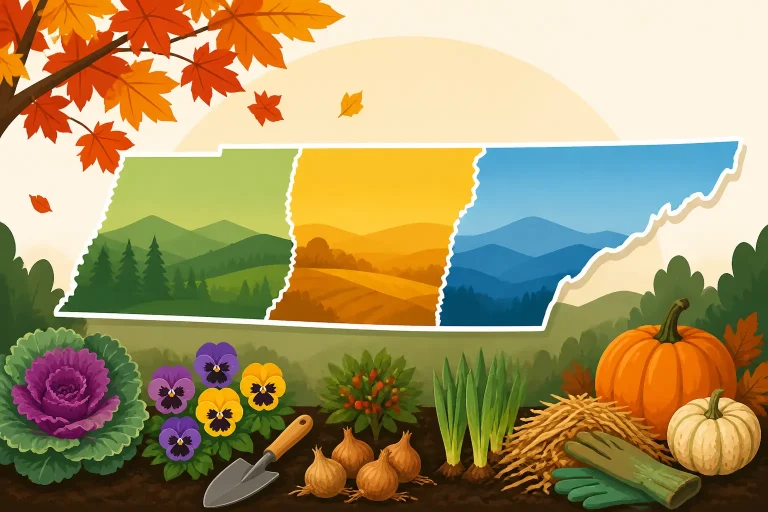
A regional calendar can help divide tasks by season and crop type. For broad monthly planning, see Tennessee Planting Calendar: Monthly Sowing and Harvest Dates. For seasonal conditions and the transition from spring planting toward fall harvest, see Tennessee Growing Season Guide: Frost Dates to Fall Harvesting. Use both as planning references, then tailor the schedule to your local conditions.
Avoid treating calendar dates as appointments that must be kept. A date can tell you when to begin paying attention, but the right action depends on weather and readiness. If seed is meant to go into warm soil, sowing just because the calendar says the season has arrived may produce poor results if the ground is still cold. If a transplant is ready but the forecast calls for unsuitable conditions, waiting can be the better choice.
It can help to plan in windows rather than a single day. A window gives room to respond to weather, soil conditions, and the condition of the plants. This is particularly helpful when arranging seed starting indoors, preparing beds, and setting out transplants. The calendar keeps work visible; observation determines whether it is time to proceed.
For a vegetable garden, also plan for the season after the first planting. A spring crop may be followed by a warm-season crop, and a later sowing may be possible as the season shifts. That kind of sequence depends on the crop, the remaining growing window, and local conditions. Zone information alone cannot tell you whether a succession planting will mature in time.
Keep the calendar useful by writing down what you will check, not just what you will do. Instead of recording only “plant,” note that you will check the forecast, soil condition, and crop readiness. The aim is not to make gardening complicated. It is to avoid confusing a general regional estimate with a green light for every bed and every plant.
Common mistakes and a better way to make decisions
The most common mistake is assuming a warmer zone means the whole garden can be planted earlier. That conclusion mixes up winter hardiness with spring weather. A perennial plant may be suited to an area’s winter conditions, while a tender vegetable in the same garden still needs suitable planting conditions.
Another mistake is treating a map boundary as a sharp line in the landscape. A map is useful for broad comparison, but conditions vary within mapped areas and from one yard to another. A gardener near an area boundary may want to compare local advice and pay close attention to site conditions, rather than relying on one label as a precise description.
A third mistake is using the zone as a substitute for plant-specific needs. Winter suitability cannot tell you whether a plant needs sun or shade, whether the ground drains well enough, or how much moisture it requires. A plant may be appropriate for the broad region and still fail in a poorly matched bed.
Other planning errors are easy to avoid:
- Buying a plant based only on a zone label, without checking its soil and light requirements.
- Assuming a mild spell means the risk of cold has passed.
- Planting all warm-season crops at the same time, even though their needs differ.
- Applying a calendar written for a broad region without considering local conditions.
- Mistaking a protected microclimate for a guarantee against cold.
- Treating a successful planting date from one season as a fixed rule for every season.
A better decision starts with the plant and the question you need to answer. For a perennial, check winter suitability and then match the plant to the bed. For a vegetable, use a crop-specific calendar and consider the conditions needed for sowing or transplanting. For an immediate decision, look at the current forecast and the plant’s tolerance rather than relying on the map alone.
It is also worth distinguishing “possible” from “reliable.” A plant might survive in a favorable spot during a mild season without being a dependable choice for every part of a yard. A crop might be planted early in an unusually warm spring and do well, but that result does not establish a safe date for later seasons. If reliability matters, favor recommendations that account for risk and give you room to adjust.
When information seems to conflict, check whether the sources are answering the same question. A hardiness label may address winter survival, while a planting calendar addresses seasonal timing. A nursery label may describe general suitability, while local gardening advice accounts for regional variation. Those recommendations may differ without actually contradicting one another.
The most useful habit is to combine broad guidance with local observation. Use the hardiness zone to screen long-lived plants, use planting calendars to organize crop timing, and use your own garden conditions to adapt the plan. When you are uncertain, wait for a more suitable window or choose a plant whose needs are a better match for the site. That is often more practical than trying to force a map label to provide an exact answer.
Frequently Asked Questions
Does a warmer hardiness zone mean I can plant vegetables earlier?
No. A hardiness zone is useful for comparing winter suitability, especially for perennial plants. Vegetable planting dates depend on the crop, seasonal weather, soil conditions, and local frost risk. Use a regional planting calendar and current conditions rather than relying on the zone alone.
Can a plant suited to my zone still fail?
Yes. A zone does not describe every condition in a garden. Poor drainage, unsuitable light, wind exposure, or a mismatch between the plant and its bed can cause problems even when winter suitability is appropriate.
Should I follow a statewide calendar exactly?
Treat a calendar as a planning aid, not a fixed rule. Tennessee has regional variation, and individual yards can differ as well. Choose guidance that reflects your region, then adjust for local weather and the conditions in your garden.
What is the best use of a hardiness-zone map?
Use it as an initial filter when choosing plants that are expected to remain outdoors through winter. Then check the plant’s other needs and consider the site where it will grow. For vegetables and planting dates, consult crop-specific timing guidance.
Disclaimer
This article is for general informational purposes only and does not constitute professional advice. Laws, prices and regulations vary by location and change over time. Consult a qualified professional for guidance on your specific situation. Tennessee Gardening Guide is not a government agency and is not affiliated with any university extension, state department of agriculture or other government agency.