Tennessee Growing Zones Map: Central and Western Regions
A Tennessee hardiness map can help narrow down which perennial plants are likely to survive winter, but it cannot tell you when to sow vegetables or whether a particular yard is warmer or colder than nearby places. For central and western gardeners, the useful approach is to treat a zone as a starting point, then account for site conditions and seasonal timing.
What Tennessee’s growing zones tell you
The Tennessee Department of Agriculture lists Tennessee’s zones as 5b, 6a, 6b, 7a, 7b, and 8a. Those labels describe winter hardiness categories: they help estimate whether a perennial plant can withstand the coldest conditions expected in an area over time.
A zone is useful when you are choosing trees, shrubs, and perennial flowers that must remain outdoors through winter. If a plant is suited to a colder zone than the one where your yard falls, it is generally a safer winter-hardiness match than a plant suited only to a warmer zone. A plant listed for a warmer zone may still grow in some yards, but it can be more vulnerable to winter injury.
Hardiness is only one part of whether a plant will thrive. It does not tell you how much sun a site gets, whether water drains away, how much summer heat a plant can tolerate, or when the last spring frost is likely. It also does not guarantee that a plant will survive an unusually harsh winter. Weather varies, and individual yards can experience conditions that differ from the broader mapped area.
That distinction matters when interpreting a map for central and western Tennessee. The statewide list includes several zones, but the list alone does not show which zone applies to a particular town, neighborhood, or address. Use a location-based map to check the area where you garden rather than assuming that a regional label applies uniformly. For help narrowing down a local result, see Finding Your Tennessee Hardiness Zone by Local ZIP Code and Looking Up Your Tennessee Planting Zone and Microclimate.
Think of the zone as a filter, not a complete planting plan. It can help you screen out plants with a clear winter-hardiness mismatch. After that, evaluate the conditions in your yard and check the plant’s other needs.
How to read a map for central and western Tennessee
A statewide zone map can make it tempting to treat a broad region as a single planting environment. In practice, the map is a starting point for a more local decision. A result for a nearby ZIP code or community can be useful, but it should not be treated as a precise description of every garden within that area.
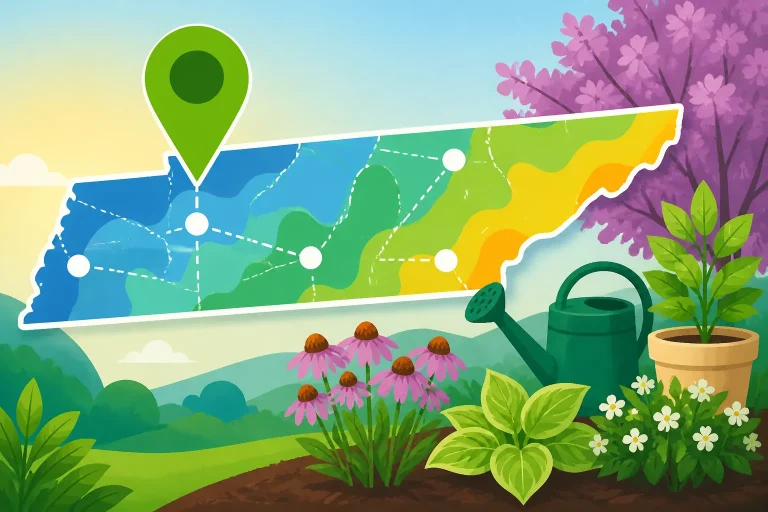
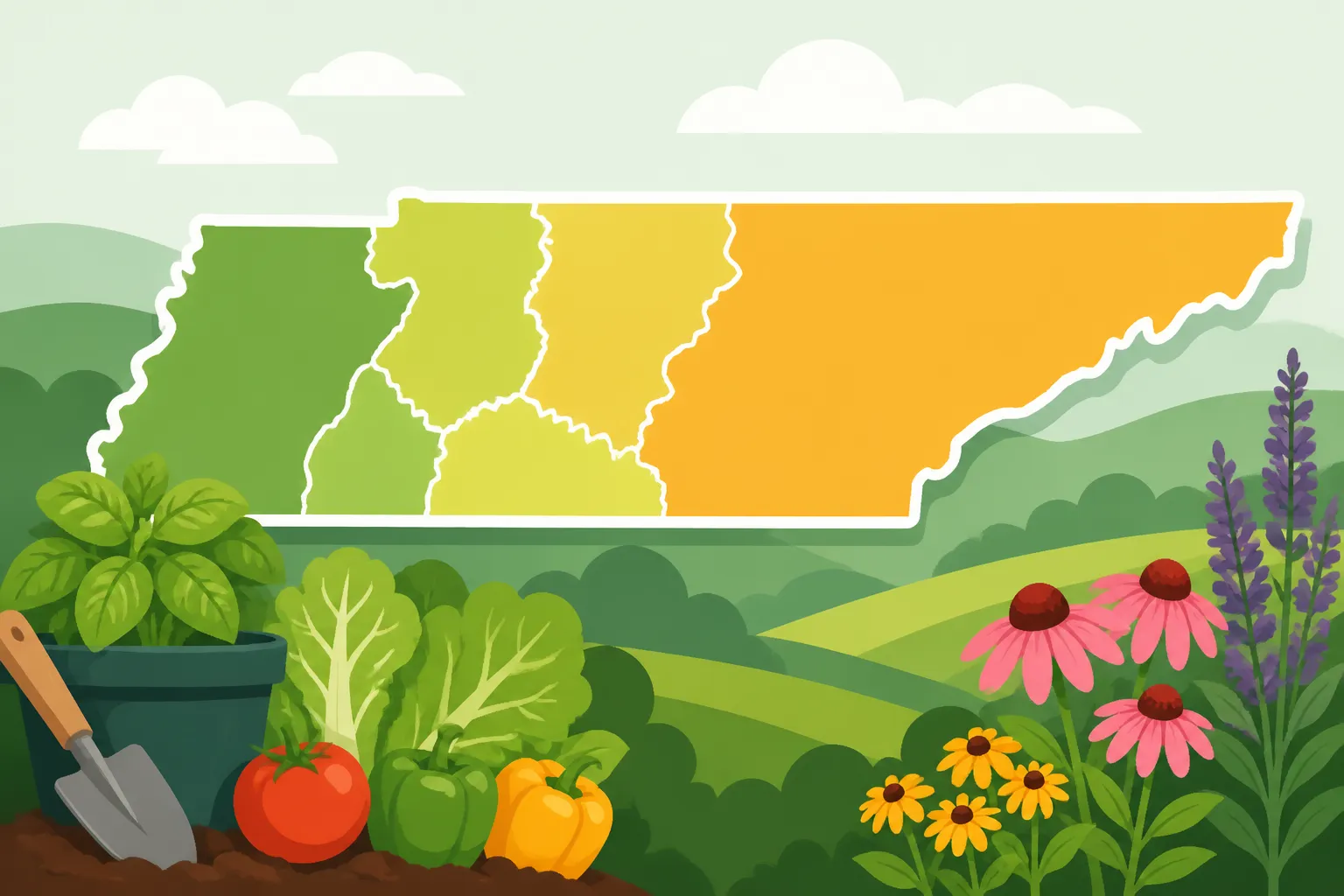
Start by looking up the location of the garden itself, or the closest available mapped location. Read the legend carefully and note the zone shown for that place. If your location sits close to a color boundary, check the mapped area around it as well. The boundary is a guide to a regional pattern, not a line on the ground that separates two perfectly uniform climates.
Next, consider how the garden site differs from the surrounding area. A sheltered space near a building may not experience the same exposure as an open, windy yard. A low spot can collect cold air, while a slope or a site protected from prevailing winds may have different conditions. Pavement and walls can affect heat, and shade can change how quickly a planting area warms or dries. These are local influences; they do not change the zone shown on the map, but they can affect plant performance.
The map also should not be read as a prediction of a particular winter. Hardiness zones represent a long-term pattern, while a single season can be colder or milder than that pattern suggests. A perennial plant that is usually suitable for a location can still be damaged by a severe cold spell, especially if it is newly planted, stressed, or growing in an exposed spot.
If a map result seems inconsistent with what you observe, do not resolve the mismatch by guessing. Compare the location with nearby mapped areas, then use the plant’s stated hardiness range and the conditions in your own yard to make a cautious choice. For a broader explanation of zone labels and warm-season categories, see Tennessee Hardiness Zones: Understanding Warm-Season Bands.
| What you are checking | What the map can help with | What you still need to assess |
|---|---|---|
| Winter suitability | Whether a perennial’s hardiness listing is a reasonable match for the mapped area | Exposure, cold-air pooling, winter moisture, and plant establishment |
| A local location | A general zone result for a town or nearby mapped point | Differences between your yard and the surrounding area |
| A map boundary | Whether nearby places are shown in different categories | How precisely the boundary represents conditions at your site |
| Vegetable timing | A general sense of regional winter conditions | Frost risk, soil readiness, crop type, and the current forecast |
| Summer performance | Very little about a plant’s full-season needs | Heat tolerance, sunlight, soil moisture, and drainage |
Use the table as a reminder to separate the map question from the planting-calendar question. If you are deciding whether a particular tree or shrub can winter outdoors, the zone is central to the decision. If you are deciding when to put a tender vegetable outside, frost timing and growing conditions matter much more.
How a hardiness zone differs from a planting calendar
A hardiness zone and a planting date answer different questions. The zone helps assess whether a perennial is likely to survive winter in a location. A planting calendar helps plan when to sow seeds, transplant starts, or harvest a crop. Treating one as a substitute for the other can lead to avoidable setbacks.
Vegetables illustrate the difference. Many garden crops are annuals, so gardeners grow them for a season rather than expecting them to survive winter outdoors. Their success depends on whether conditions suit their stage of growth: germination, transplant establishment, flowering, fruiting, or harvest. A zone label alone does not say whether the soil is workable, whether a late frost is possible, or whether heat is likely to interfere with the crop.
For example, a seed packet’s days-to-maturity estimate does not become a planting date just because a garden falls in a particular zone. You still need to consider the crop’s preferred conditions, the local frost outlook, and how much of the growing season remains. Likewise, a map cannot tell you whether a fall crop has enough time to mature before cold weather arrives.
A calendar is more useful when it is adjusted for local conditions rather than followed as a rigid schedule. Central and western Tennessee gardeners can use regional guidance as a planning framework, then adapt for elevation, shade, soil warmth, and the specific conditions of the yard. A warm, protected bed may be ready before a cold, exposed one, while a sheltered site may also retain heat later in the season.
For seasonal vegetable planning, start with Tennessee Planting Guide: What Vegetables to Sow Each Month or Tennessee Vegetable Planting Calendars: Adjusting for Region. Those topics address the timing question that hardiness maps do not answer. For a broader seasonal overview, Tennessee Growing Season Guide: Frost Dates to Fall Harvesting connects spring and fall timing with the overall garden cycle.
When using a calendar, separate crops into broad groups:
- Cool-season crops are generally planned around periods when temperatures are moderate. Their schedule may include spring and fall opportunities, depending on the crop and local conditions.
- Warm-season crops need conditions that support heat-loving growth. Planting them too early can expose tender seedlings or transplants to cold stress.
- Perennials need a suitable site and enough time to establish. The hardiness zone can help assess winter survival, but planting conditions and aftercare still matter.
The main takeaway is simple: use a zone map to screen for winter suitability, then use a calendar and local weather information to plan seasonal work. For garden decisions, both tools are useful, but they solve different problems.
Choosing trees, shrubs, and perennial flowers
For long-lived plants, the zone is one of the first details to check. Before buying a tree, shrub, or perennial flower, look for the plant’s recommended hardiness range and compare it with the result for your garden location. If the plant’s listing does not include a range or uses unfamiliar terminology, ask the nursery or consult a reliable plant reference before making a decision.
A compatible zone does not automatically make a plant suitable for your yard. Check the full set of growing requirements, especially sunlight, drainage, moisture, and mature size. A plant may be hardy enough for winter but perform poorly in heavy shade, persistently wet soil, or a hot, exposed bed. Conversely, a site that fits a plant’s light and soil needs does not make a tender plant winter-hardy.
Compare hardiness ranges before buying
Use plant labels and catalog descriptions as screening tools, not guarantees. A plant marked for colder conditions than your mapped location may have a useful margin for winter survival. A plant listed only for warmer conditions deserves more caution, particularly in exposed places or areas where winter cold can collect.
When two plants have similar ornamental value, choose the one whose hardiness range gives a more comfortable match for your site. That can reduce the chance that winter injury becomes a recurring problem. It is not a promise of perfect performance, because a plant’s health also depends on establishment, drainage, and care.
Match the plant to the site
Before planting, observe the bed rather than relying on the zone alone. Notice when it receives direct sun, whether water stands after rain, and whether wind or reflected heat affects it. Think about how nearby trees and buildings may cast shade or change airflow as seasons shift.
Soil and drainage deserve particular attention. A plant that tolerates winter cold may still decline in soil that remains saturated. If the site is unfamiliar, examine how water moves through it before choosing plants. Fitting a Vegetable Garden to Your Yard’s Real Soil focuses on edible beds, while How to Test Garden Bed Drainage Before Installing New Plants covers the drainage question for planting sites.
Think about establishment, not just survival
A plant can be hardy once established and still struggle while young. New plantings need conditions that allow roots to settle in, including suitable soil moisture and protection from avoidable stress. Pay attention to planting depth, the condition of the root ball, and whether the plant is suited to the site’s drainage.
Do not assume that a plant is failing because its zone match is wrong. Symptoms such as wilting, leaf scorch, poor growth, or dieback can also result from water stress, disease, pests, or unsuitable soil. If a plant struggles, review its care and growing conditions before replacing it with another plant based only on the map.
Use caution with marginal choices
Some gardeners are willing to try plants whose listed range is close to the local zone result, especially in a protected microclimate. That is a reasonable experiment if you are comfortable with the risk, but it should not be confused with a dependable landscape choice. A plant at the edge of its stated hardiness range may be more vulnerable to a severe winter or a poorly drained location.
If dependable winter survival matters, choose plants with a better hardiness fit and site them according to their needs. If experimentation is part of the goal, start with a small planting rather than building an entire bed around a borderline choice. That way, a difficult season is less likely to leave a large gap in the landscape.
Applying zone information to vegetable gardens
Vegetable gardeners often search for a zone because it seems like a shortcut to planting dates. It is not. A zone can describe broad winter conditions, but vegetable schedules depend on crop type and the conditions at the time of planting. A map cannot say whether the soil in your bed is ready or whether tender transplants should stay indoors.
Plan around crop needs
Begin by separating crops according to their temperature preferences. Cool-season crops are planned for moderate conditions, while warm-season crops need warmer conditions to establish and grow well. That distinction is more practical for day-to-day vegetable timing than a zone label.
The same garden may have different planting opportunities across the season. A spring crop may be followed by another crop after harvest, while a fall planting may need to be started early enough to mature before cold weather. The exact schedule depends on the crop, the garden’s local conditions, and the seasonal forecast.
For regional crop guidance, use Cool-Season vs Warm-Season Crops: Sowing Windows for Tennessee alongside a monthly planting resource. If you are planning a second planting after spring harvest, Timing a Tennessee Fall Garden: Sowing Second-Season Greens can help frame the separate timing decisions involved.
Avoid treating frost risk as a zone value
A zone does not tell you the date of the last spring frost or first autumn freeze. Those dates are estimates, not fixed appointments, and actual weather can differ from historical patterns. Use a location-relevant frost guide and keep checking forecasts as a planting window approaches.
For the frost-specific side of planning, see Tennessee Frost Dates: Spring and Fall Freeze Timelines. That information is more directly relevant than a hardiness zone when you are deciding whether to move tender crops outdoors. A plant may be suitable for a region’s winter zone yet be damaged by a late cold event during active growth.
Check the bed, not only the air
Soil conditions matter too. A sunny bed, a shaded bed, and a raised bed can warm and dry at different rates. Soil that is cold or wet may delay germination or stress transplants, even if the weather seems suitable. Before sowing or transplanting, consider the crop’s needs and the actual condition of the bed.
A thermometer can help you check soil warmth when a crop depends on it, but the reading does not replace crop-specific instructions. Use a planting resource that names the crop and the relevant conditions, then compare that advice with what you observe in your garden. If a crop is sensitive to cold, waiting for suitable conditions can be safer than relying on a zone label or a calendar date alone.
Adjust rather than abandon the calendar
Regional calendars are useful starting points, not guarantees. If your yard is sheltered, your schedule may differ from a more exposed site. If your beds remain cool or wet, delaying a sowing may be sensible. Keep notes about what you planted, the condition of the soil, and how the crop performed. Over time, those observations can make a general calendar more useful for your own garden.
The goal is not to find a single perfect date from a zone map. It is to combine crop requirements, local frost guidance, soil conditions, and weather into a decision that fits the planting site.
Microclimates and other limits of a regional map
A map gives a broad view. A garden is a small place with its own combination of shade, wind, moisture, and exposure. That is why two nearby yards can produce different results even when they appear to share a mapped zone.
A microclimate is a localized condition that differs from the broader surroundings. You do not need specialized equipment to start noticing one. Watch where frost lingers, where snow or water remains, which beds dry quickly, and where wind is strongest. These observations can help explain why a plant succeeds in one corner of a yard and struggles elsewhere.
Exposure and nearby structures
Buildings, fences, and paved surfaces can affect how a site receives or retains heat. A wall may shelter plants from wind, while a paved area may reflect heat into a nearby bed. These effects can be helpful or harmful, depending on the plant. A sheltered spot might be suitable for a plant that dislikes exposure, but extra reflected heat can stress plants that prefer cooler conditions.
Do not assume that shelter will solve every hardiness problem. A protected area can still have poor drainage, insufficient light, or a site-specific cold pocket. Use the plant’s requirements and observe the bed throughout the season.
Slopes and low areas
Land shape can influence air and water movement. Low areas may hold cold air or stay wet longer, while sloped areas can drain differently. A slope with strong exposure may also dry more quickly. These patterns are reasons to compare planting sites within a yard rather than treating every bed as interchangeable.
If a particular spot repeatedly has poor results, consider changing the plant choice or moving the planting location. Matching a plant to the site is often more effective than trying to compensate for a mismatch through extra care.
Shade, soil, and moisture
Shade can influence temperature and drying, but it also determines whether a plant receives enough light. A hardiness match does not make a sun-loving plant suitable beneath a dense canopy. Check the expected light needs of the plant and consider how nearby trees may change the pattern of sun and shade during the growing season.
Soil moisture is equally important. A site that stays wet after rain may be unsuitable for a plant that needs good drainage, regardless of its winter rating. A dry slope can create the opposite challenge. Choose plants for the conditions you actually have, or improve the bed where doing so is practical and appropriate.
For help understanding how yard light affects plant choice, see Measuring Sunlight Hours in Tennessee Garden Beds. For general soil and bed planning, Tennessee Homeowner Guide to Garden Mulch, Drainage, and Bed Soils can help connect site conditions to practical decisions.
Keep observations separate from map labels
A microclimate does not change the mapped zone. It provides additional context for deciding what to plant and where. Keep the map result, the plant’s stated hardiness range, and your own site observations as separate pieces of information.
This approach prevents a common misunderstanding: seeing a plant survive in a sheltered yard and assuming it will perform equally well across the neighborhood. A favorable corner may have conditions that nearby sites do not. Likewise, a difficult spot should not be used to judge how every garden in the broader region will perform.
A practical way to use the map before planting
A simple routine can keep the map useful without giving it more authority than it deserves. Use it when making long-term planting choices, then bring in the additional information that each decision requires.
- Look up the garden location. Use a location-specific map result rather than assigning a zone to all of central or western Tennessee. If the result is near a mapped boundary, compare it with the areas around it.
- Check the plant’s hardiness listing. Compare the stated range with the mapped result. If the plant is a borderline choice, decide whether you are comfortable with the risk.
- Review the plant’s other requirements. Check light, drainage, moisture, soil, and mature size. A good winter match is not enough if the site is otherwise unsuitable.
- Separate perennial decisions from annual crop timing. Use hardiness information for winter survival questions. Use crop-specific schedules and frost guidance for seed sowing and transplanting.
- Observe the exact planting spot. Note exposure, shade, standing water, wind, and how quickly the soil dries. Choose a location that fits the plant rather than trying to make the zone do that work.
- Check current conditions before seasonal work. A general calendar is a planning aid. The weather and condition of the bed determine whether it is a good time to proceed.
- Record what happens. Keep brief notes about the site and plant performance. Those observations can help distinguish a broad climate issue from a problem specific to one bed.
This process works for a new landscape bed, a replacement shrub, or a vegetable garden. It also makes the map easier to use: instead of asking it to provide a complete planting plan, use it to answer the winter-hardiness question and let other tools address timing and site fit.
If you are choosing a long-lived plant, prioritize a sound hardiness match and suitable site conditions. If you are scheduling vegetables, prioritize the crop’s temperature needs, frost information, and soil readiness. If you are planning an entire yard, combine both kinds of information rather than relying on one map layer.
Frequently Asked Questions
Does one zone apply to all of central and western Tennessee?
No. A broad regional description should not replace a location-specific map lookup. Check the mapped result for the garden location and consider the conditions at the planting site.
Does a hardiness zone tell me when to plant vegetables?
No. It helps with winter-survival decisions for perennial plants, but vegetable timing depends on the crop, frost risk, soil conditions, and weather. Use a crop-specific calendar for sowing and transplanting.
Can a plant outside its listed hardiness range still grow in my yard?
It may grow in a sheltered or otherwise favorable site, but that is a higher-risk choice rather than a guarantee. Check the plant’s full requirements and consider whether you are willing to replace it if winter conditions cause damage.
Why might a plant struggle even when its zone seems suitable?
A suitable zone does not ensure the right sunlight, drainage, moisture, soil, or exposure. Check those conditions before deciding that the mapped hardiness result is the cause.
Disclaimer
This article is for general informational purposes only and does not constitute professional advice. Laws, prices and regulations vary by location and change over time. Consult a qualified professional for guidance on your specific situation. Tennessee Gardening Guide is not a government agency and is not affiliated with any university extension, state department of agriculture or other government agency.