Tennessee Vegetable Planting Calendars: Adjusting for Region
A Tennessee planting calendar can be useful until your yard, elevation, or spring weather does not match its dates. The practical solution is to treat the calendar as a planning framework, then adjust for your region, local frost risk, soil conditions, and the time each crop needs. That approach helps you make decisions without treating a date as a guarantee.
What a Tennessee planting calendar can and cannot tell you
The University of Tennessee Institute of Agriculture describes its calendar as intended to help plan a residential vegetable garden and fruit production. Use the calendar to schedule planting, harvesting, and management practices, as the University of Tennessee Institute of Agriculture advises.
A calendar is a starting point, not a promise that every garden in a region can plant on the same day. Tennessee includes different growing conditions, and even nearby yards can differ. A low spot may collect cold air; a sloped bed may warm and drain differently; a shaded site may lag behind a sunny one. A printed date cannot account for every feature of your plot.
The most useful way to read a planting calendar is as a set of windows and decision points. It can help you decide what to prepare, what to sow or transplant next, and what to watch for as the season changes. Then you compare that plan with local conditions before acting. If the calendar suggests a planting window but the soil is cold, wet, or difficult to work, waiting may be more sensible than following the date mechanically.
A calendar also does not guarantee a harvest. Germination, transplant establishment, heat, rainfall, pests, disease, and care all affect what happens after planting. A crop may be planted at a reasonable time but still struggle if its bed is poorly drained or its light conditions do not suit it. For site-specific help, start with Tennessee Home Vegetable Gardening Guide: Soil, Sun, and Care.
It helps to separate the calendar’s guidance into three questions:
- What is the crop’s general season? Some vegetables are better suited to cool conditions, while others need warmth.
- What is happening locally? Your region, elevation, yard exposure, and current weather affect when conditions are suitable.
- What does this particular bed need? Soil readiness, moisture, sunlight, and space can change the best choice or timing.
This separation keeps a calendar useful even when the date on the page does not match the weather outside. Rather than asking whether a printed date is “right,” ask what conditions the calendar is meant to help you plan for, and whether those conditions are present in your garden.
For a broader view of how planting relates to the rest of the season, see Tennessee Growing Season Guide: Frost Dates to Fall Harvesting. A growing-season plan can help connect spring preparation to later harvests and fall cleanup, while a planting calendar helps organize choices along the way.
Why the same schedule does not fit every Tennessee garden
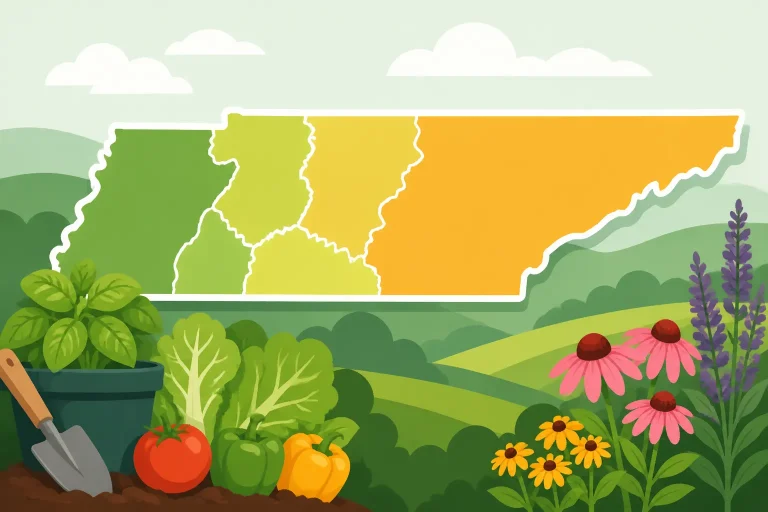
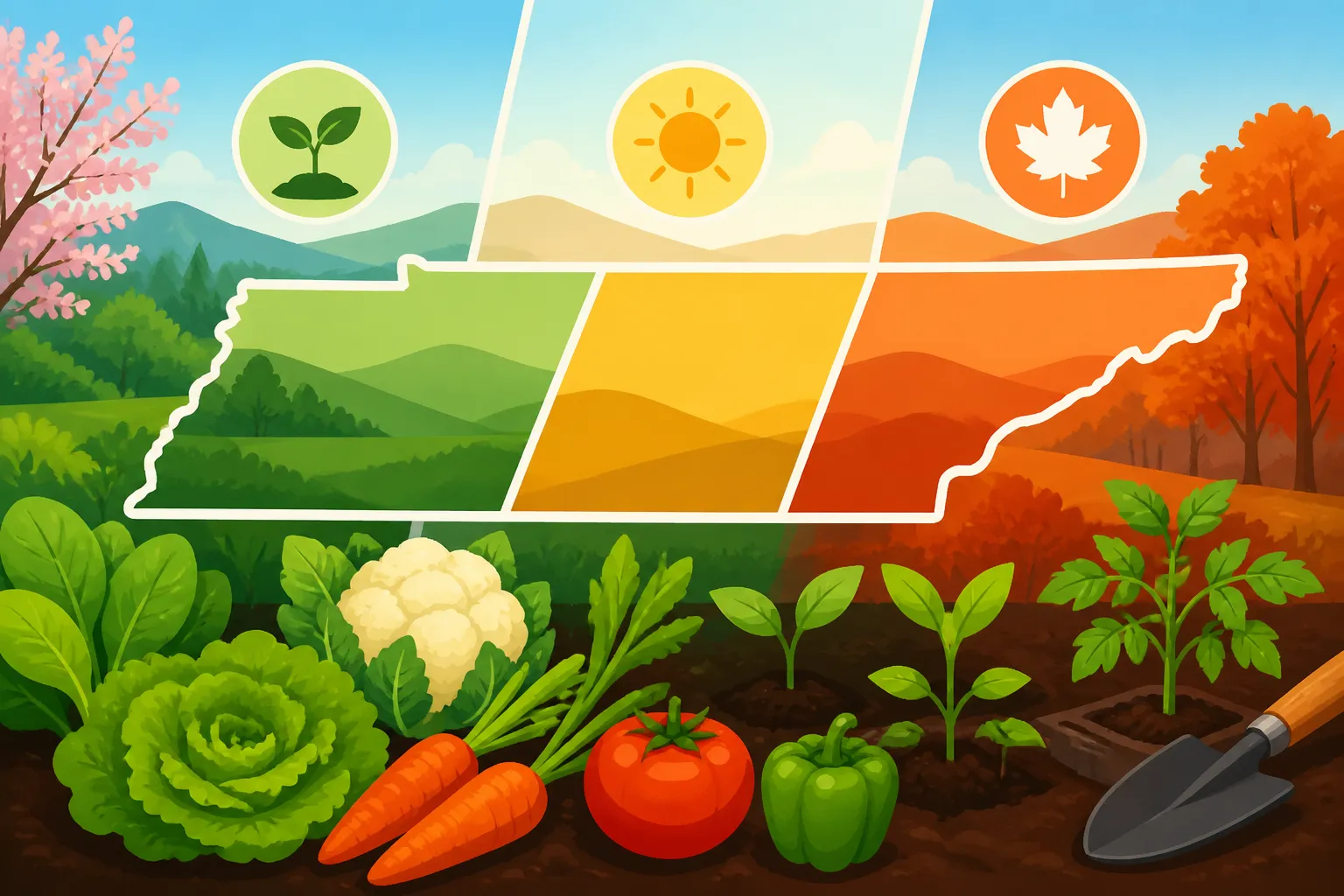
Regional differences matter because a statewide calendar cannot represent the exact conditions at every home. West, Middle, and East Tennessee are useful broad labels for organizing a plan, but they are not substitutes for observing your own property. Local terrain, exposure, and weather can matter as much as the broad region.
Elevation is one reason a schedule may need adjustment. A garden at a higher or more exposed site can experience conditions that differ from a lower, sheltered yard. Hillsides, ridges, valleys, and other local landforms may also affect how quickly a bed warms and how long cold air lingers. If your garden is in a mountainous or high-elevation area, consult How Mountain Elevation Delays Tennessee Sowing and Freeze Dates before using a broad regional schedule as your only reference.
Your microclimate is the set of local conditions around the growing space. Consider whether the bed is sheltered from wind, shaded by buildings or trees, or open to the sky. Notice whether it sits at the bottom of a slope or on a raised area. These details can influence how soon the soil is workable and whether a crop is exposed to cold or heat. For help assessing the small-scale differences around a property, see Looking Up Your Tennessee Planting Zone and Microclimate.
A practical calendar should therefore have two layers:
- A regional reference: Use a schedule intended for your general part of Tennessee.
- A garden-level adjustment: Adapt it to your site, the crop, and the conditions you can observe.
If you cannot find a calendar that exactly matches your location, avoid pretending that a nearby schedule is precise. Use it to understand the general order of tasks, then verify local timing through a county calendar or other appropriate local guidance. County Planting Schedules in Tennessee: Finding Local Calendars can help you look for a more localized reference.
A calendar built for a particular town or county is still a guide, not a guarantee. A sheltered urban plot and an exposed rural bed can behave differently even when they are in the same broad area. Use local schedules to narrow your planning, then pay attention to the garden itself.
How to adjust timing by region and site
Begin by identifying the calendar’s intended region and the assumptions behind it. Does it describe a broad part of Tennessee, a county, or a particular set of growing conditions? If the schedule does not explain its limits, treat it as a general reference rather than a day-by-day instruction. Comparing more than one local resource can help you spot where guidance is consistent and where it depends on the site.
Next, describe the garden you are planning for. Keep the notes simple and practical:
- Is the bed in full sun for much of the day, partly shaded, or shaded?
- Does it sit in a low area, on a slope, or on level ground?
- Is it sheltered from wind or open to it?
- Does water drain away, or does the bed stay soggy after rain?
- Is the soil ready to work, or is it compacted and wet?
- Are you planting in the ground, in a raised bed, or in containers?
Those observations help explain why the same calendar may work well in one part of your property and less well in another. A sunny, well-drained bed and a shaded, slow-draining bed should not automatically be treated as equivalent.
Then match the crop to the conditions it needs. A calendar may suggest a general planting period, but the crop’s tolerance for cold or heat, its time to mature, and whether it is sown directly or transplanted all affect the decision. Check the seed packet or plant label for crop-specific information, and use the calendar to place that information in the broader seasonal plan.
Before sowing or transplanting, check the weather and the bed rather than relying only on the calendar. Cold, heavy rain can make a bed unsuitable for working; a warm spell can be followed by a cold snap. Likewise, a week of hot, dry weather can make newly planted seedlings more demanding to establish. A plan that includes a check immediately before planting is more resilient than one that assumes conditions will follow a fixed schedule.
If the forecast or soil conditions are not suitable, delaying the task is often a reasonable adjustment. The goal is not to “catch up” with every date on a calendar. It is to put the crop into a garden where it has a fair chance to establish. For additional ways to think about spring timing, see Calculating Spring Planting Windows from Station Freeze Probabilities and Weighing Spring Freeze Probability When Sowing Tender Crops.
Keep a local record
A personal garden record can make future planning more accurate. Note when you sow, transplant, and harvest; what the weather was like; and how the plants performed. Include simple observations such as “soil stayed wet,” “seedlings struggled in afternoon shade,” or “the bed warmed sooner than the back garden.” These details are more useful than a date alone because they help explain what happened.
Record the crop and the location within the yard, too. If you move the same crop to a different bed, past results may not transfer. A sunny raised bed and a shaded in-ground row may have different needs even when they are close together.
At the end of a season, compare your notes with the calendar you used. Did the recommended window give you a useful starting point? Did the local conditions push you to wait, or did the crop mature sooner or later than expected? Use that information to adjust the next plan, while remembering that weather varies from season to season. A record helps you learn from your site; it does not turn future weather into a certainty.
Plan crops by season, not by date alone
Vegetables are often grouped by the conditions they prefer. Cool-season crops generally fit better into cooler parts of the growing cycle, while warm-season crops need warmer conditions. That distinction is more useful than memorizing a date without understanding what a crop needs.
For a cool-season crop, consider whether the bed is ready and whether the likely conditions suit germination and growth. For a warm-season crop, consider whether the soil and weather are warm enough and whether cold conditions are still a concern. The right decision can differ between a protected site and an exposed one, or between an early spell of warmth and a settled change in conditions.
A crop’s method of establishment matters too. Direct-sown crops are planted where they will grow, while transplants are started elsewhere and moved into the bed. These methods affect the work you need to schedule. Seeds need a suitable seedbed and consistent conditions for germination; transplants need to be healthy and prepared to adjust to outdoor conditions. A calendar should help you organize both routes, not push you into treating them as interchangeable.
Use the seed packet or plant label for the crop’s stated planting and maturity information. That information can help you judge whether a crop fits the time you have left in the season, but it should still be considered alongside local weather and the condition of the bed. For example, a crop that needs a long period to mature may be a poor fit if the remaining growing window is short, even if it can technically be planted.
It is also worth planning for the end of the crop, not only its start. A calendar that tells you when to sow but leaves no room for harvesting, clearing the bed, or preparing for a follow-on crop is incomplete. Think about the full sequence: prepare the bed, plant, maintain, harvest, and decide what will follow.
For a focused comparison of cool- and warm-season timing, use Cool-Season vs Warm-Season Crops: Sowing Windows for Tennessee. If your plan includes crops for more than one season, Tennessee Planting Guide: What Vegetables to Sow Each Month can help organize the seasonal choices. Treat any monthly reference as a planning aid and check it against conditions in your own garden.
Make room for a second planting
A garden does not have to be planted all at once. As one crop finishes, the space it leaves can be part of a later planting plan. This is useful when you want to make continued use of a bed, but a follow-on crop needs enough time and suitable conditions to grow. Do not plant a second crop simply because the first has been removed; check whether the new crop’s needs fit the remaining season.
When planning successive crops, consider how much space will become available and when. A gradual harvest may free up a bed in stages, while a crop that finishes all at once may leave a larger open area. Keep track of what is actually ready to clear, rather than assuming the whole planting will follow an ideal schedule. For practical ideas on extending sowing across a season, see Succession Sowing Guide: Maximizing Your Tennessee Season.
The same approach can help avoid overcrowding. If seedlings or transplants are already filling a bed, adding another crop before there is room can make care and harvesting harder. A calendar is most useful when it coordinates space as well as time.
Build a calendar around preparation and follow-up
Planting is only one task in the vegetable garden. A useful calendar includes the work that comes before and after it: choosing a site, preparing soil, arranging crops, watering, monitoring plants, harvesting, and clearing beds when a crop is finished.
Start with the bed. Check its sunlight, drainage, and condition before choosing what to grow. If the soil is compacted or stays wet, address that issue rather than trying to solve it by planting on a more favorable date. If you are unsure whether the location suits vegetables, Fitting a Vegetable Garden to Your Yard’s Real Soil offers a useful place to start.
Next, map the planting space. Leave room to reach plants for weeding, care, and harvest, and avoid treating every open patch as immediately available. Consider how tall or spreading plants will affect nearby crops. A simple sketch can show which beds are occupied, which will open up, and where a follow-on planting might fit.
Then schedule the tasks that support establishment. If seedlings are being raised indoors, include their preparation for outdoor conditions in the plan. If the garden is being direct-sown, make sure the seedbed is ready and that watering can be managed. If plants are being transplanted, prepare the bed before the plants are waiting to go in. Hardening Seedlings to Protect Against Late Spring Freezes explains why preparation matters before moving seedlings outdoors.
Watering should also be part of the plan, especially while plants are establishing and during dry or hot spells. Avoid assuming that rainfall or a fixed weekly routine will meet every bed’s needs. Soil, weather, crop stage, and container size all influence how quickly moisture is lost. For a practical overview, see Watering Your Tennessee Garden: Weekly Amounts and Timing, then judge your garden’s conditions rather than applying a schedule blindly.
Make harvesting part of the calendar, too. A crop that is ready but left unattended can take up space that might be needed for later planting. Regularly checking plants helps you notice when a harvest is underway, when a bed is nearing the end of its useful season, and when maintenance is needed. For help deciding when to remove a finished crop, see Knowing When Crops Are Finished: Signs It Is Time to Clear Beds.
Use a flexible planning routine
A short planning routine helps keep the calendar manageable:
- Before the season: Choose crops that suit the space, review local timing, and identify likely planting windows.
- Before each planting: Check the weather, soil condition, available space, and crop instructions.
- While plants grow: Track watering, pests, disease, and signs that a crop is ready to harvest.
- As a bed opens: Decide whether the next crop fits the remaining season and the bed’s condition.
- After harvest: Note what performed well and what you would change.
This routine avoids the trap of trying to predict every task far ahead. A calendar can show what may be coming; regular checks tell you whether the garden is ready for it.
Plan for spring and fall with different priorities
Spring and fall planting both depend on matching crops to conditions, but they present different planning challenges. In spring, gardeners are watching for the transition from cold conditions to warmth. A warm spell can make planting feel urgent, but it does not guarantee that the soil or weather will stay suitable. For tender crops, avoid treating the first warm stretch as proof that cold risk has passed. Waiting for Low Freeze Risk Before Setting Out Sensitive Crops can help you think through that decision.
Spring planning also involves coordinating indoor starts, bed preparation, and outdoor planting. If transplants are ready before the garden is, their timing can become awkward. If the garden is ready but seedlings are not, the plan may need another route, such as direct sowing where appropriate or choosing a transplant. New to Tennessee Gardening: Sowing Seeds or Buying Transplants can help you weigh those options.
Fall planting works backward from the end of the season. Instead of focusing only on when a seed can be sown, consider how much suitable growing time remains and what conditions the crop needs to mature. The calendar should help you avoid starting a crop so late that it cannot establish or produce as intended. It should also leave room for harvest and for protecting crops when conditions change.
A fall plan should be flexible enough to account for heat and dry weather early in the season, followed by cooler weather later. Newly sown crops may need attention while the soil is warm and dry; later, changing temperatures can affect growth and harvest. Tennessee Fall Vegetable Gardening: Greens, Roots, and Brassicas provides a seasonal overview, while Using Fall Freeze Dates to Calculate Tennessee Sowing Windows focuses on planning backward from the end of the season.
The important difference is the direction of planning. In spring, watch for conditions becoming suitable; in fall, consider how much suitable time remains. In both seasons, local weather and the garden’s actual condition matter more than a date treated as a guarantee.
Common calendar mistakes and how to avoid them
Treating a statewide date as a local promise
A broad calendar may be accurate as general guidance while still being a poor fit for a specific yard. Avoid applying it without considering elevation, slope, shade, drainage, and exposure. A regional schedule should narrow your choices, not replace observation.
Planting because a date has arrived
A date on the calendar does not make soil workable or weather suitable. If a bed is saturated, cold, or otherwise unready, pause and assess it. A short delay can be better than putting seeds or transplants into conditions they cannot handle.
Assuming every crop has the same needs
Different crops respond differently to cold, warmth, transplanting, and maturity time. Do not apply one crop’s timing to another just because they share a bed or appear on the same month’s schedule. Check crop-specific instructions and plan each planting on its own terms.
Ignoring the bed after planting
Planting is not the end of the task. New crops need attention as they establish, and changing weather can increase the need for watering, protection, or monitoring. Include those follow-up tasks so your plan does not stop at sowing.
Forgetting that a planting window can be missed
If the ideal opportunity has passed, do not assume the garden season is over. Check whether a different crop, a faster-maturing choice, or a later planting is suitable for the remaining conditions. Avoid sowing a crop simply to fill space when there is not enough time or suitable weather for it to succeed. Is It Too Late to Start a Fall Garden in Tennessee? can help you assess late-season options.
Confusing hardiness information with planting timing
A plant hardiness zone describes a different aspect of growing conditions than a vegetable planting calendar. It can provide context, but it does not tell you whether a particular bed is ready for a specific crop today. For zone information, see Finding Your Tennessee Hardiness Zone by Local ZIP Code, and use planting guidance separately to make seasonal decisions.
Planning only for the first harvest
A planting plan should account for what happens when crops finish. If a bed is not cleared or prepared when a crop is done, a planned follow-on planting may not fit. Keep the sequence realistic and leave room for maintenance, harvesting, and transitions between crops.
Frequently Asked Questions
Should I follow the same planting dates everywhere in Tennessee?
No. Use a schedule for your general region, then adjust for your elevation, yard conditions, soil readiness, and local weather. A regional calendar is a starting point, not a guarantee for every garden.
What should I check before planting?
Check the crop’s instructions, current weather, soil condition, available space, and the conditions of the specific bed. For transplants, make sure they are prepared for outdoor conditions; for direct sowing, make sure the seedbed is suitable.
Can I still plant if I missed the calendar’s suggested window?
Possibly. Check what conditions remain, how much time the crop needs, and whether another crop is a better fit. Do not plant solely to follow a schedule if the remaining season or bed conditions are unsuitable.
How can I make future calendars more accurate for my yard?
Keep notes on planting, harvest, weather, and how crops performed in each bed. Use those records to adjust future plans, while remembering that weather and growing conditions vary from season to season.
Sources
- University of Tennessee Institute of Agriculture — UTIA Real. Life. Solutions. (checked November 15, 2026)
Disclaimer
This article is for general informational purposes only and does not constitute professional advice. Laws, prices and regulations vary by location and change over time. Consult a qualified professional for guidance on your specific situation. Tennessee Gardening Guide is not a government agency and is not affiliated with any university extension, state department of agriculture or other government agency.