Tennessee November Garden Calendar: West, Middle, and East
November can bring mild afternoons, sharp overnight freezes, or both in the same week. That makes a Tennessee garden calendar less about a single planting date and more about checking local conditions. Use the month to finish fall harvests, protect what is still growing, plant suitable dormant-season crops, and tidy beds without removing every bit of useful habitat.
Plan Around Your Region and the Weather
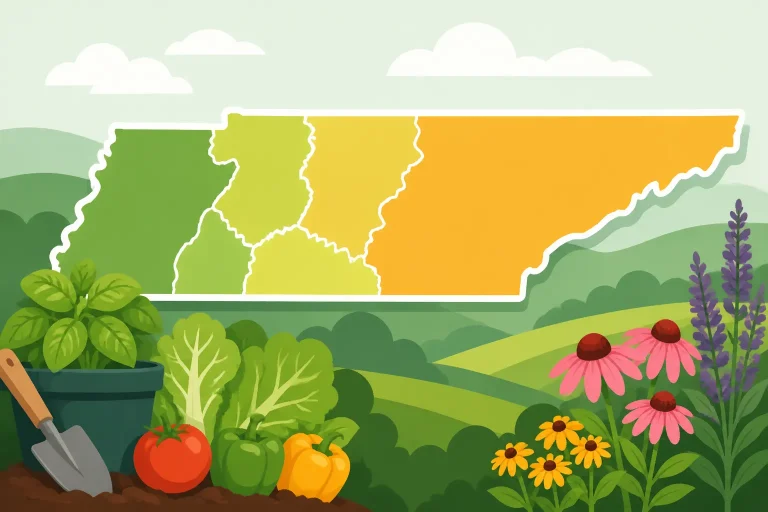
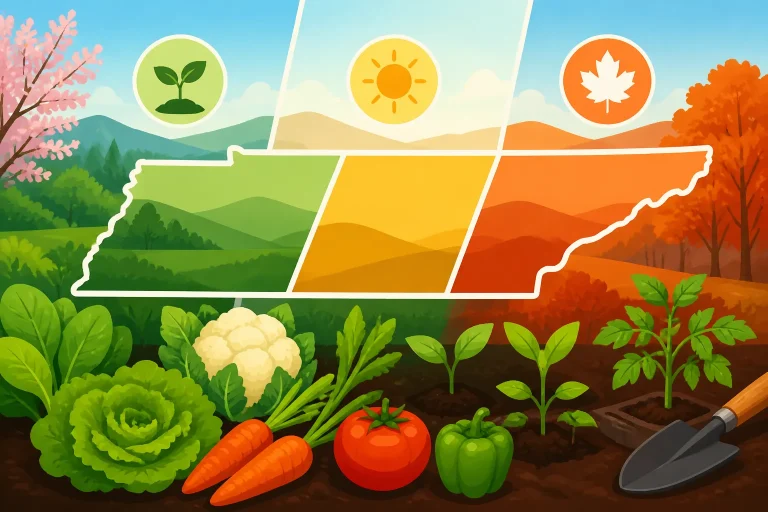
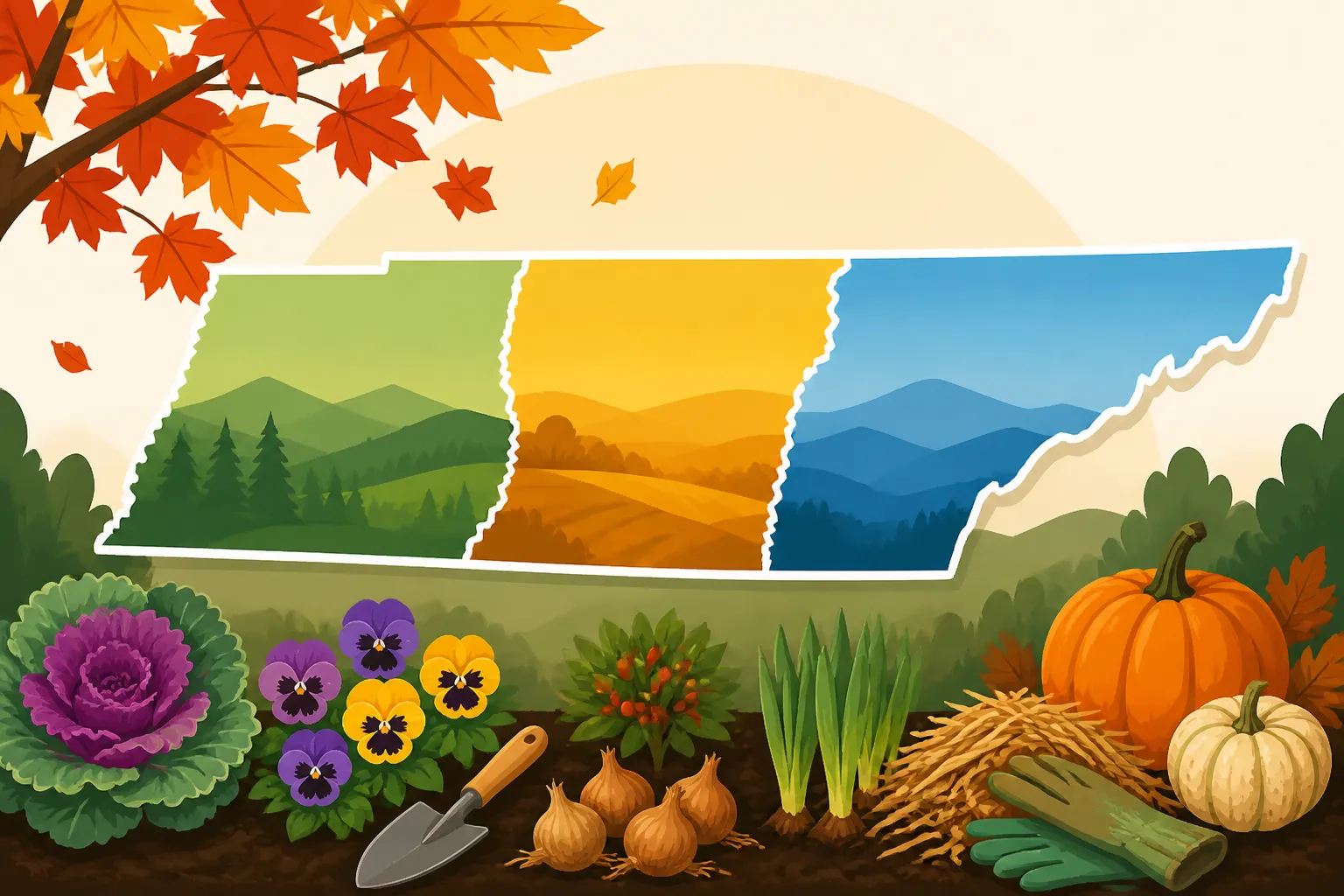
November conditions vary across Tennessee. Western gardens may stay workable longer during mild spells, while eastern gardens can experience greater variation with elevation and local terrain. Middle Tennessee often falls between those patterns, but a sheltered city yard and an exposed hillside can still behave differently.
Use your own garden’s conditions—not the regional label alone—to decide what to do. A low spot can collect cold air, a south-facing wall can hold warmth, and a windy or elevated bed can cool quickly. Pay attention to the forecast and the soil as well as the calendar. A date associated with a first freeze is a probability, not a promise that every garden will freeze on that day. For a broader explanation of how to use local freeze information, see Tennessee Frost Dates: Spring and Fall Freeze Timelines and Using Fall Freeze Dates to Calculate Tennessee Sowing Windows.
| Region | What to watch in November | A practical focus |
|---|---|---|
| West Tennessee | Mild stretches may extend outdoor work, but sudden freezes are still possible | Finish harvests, check fall crops, and use suitable mild weather for bed preparation |
| Middle Tennessee | Warm days can alternate with cold nights; exposed sites may cool faster than protected ones | Protect crops that are still worth harvesting and complete seasonal cleanup in stages |
| East Tennessee | Conditions vary with elevation, valley position, and exposure; mountain and plateau sites may cool sooner | Be cautious with tender crops and prioritize freeze preparation in exposed or cooler locations |
Treat this table as a planning aid, not a schedule. A warm November does not make tender vegetables winter-hardy, and an early cold snap does not mean every bed is finished. If a crop is still producing, assess its condition and the forecast before deciding whether to harvest, cover, or remove it.
For a region-specific overview of the growing season, Tennessee Growing Season Guide: Frost Dates to Fall Harvesting can help connect fall timing with the work that follows. Gardeners in higher terrain may also find High-Elevation Planting Calendars: Adjusting for Cooler Nights useful when a nearby lowland calendar does not match local conditions.
Finish the Vegetable Garden Without Rushing
November is a transition month for the vegetable garden. Some beds may still hold leafy crops or roots, while summer plants have stopped producing or suffered cold damage. Start by checking what is harvestable, what is likely to keep growing, and what is better removed.
Harvest crops that are ready
Pick mature vegetables before a forecast freeze if the crop is sensitive to cold or if the harvest is ready to use. Remove damaged produce from the garden rather than leaving it to decay among the plants. For crops that tolerate cool weather, harvest according to their condition and intended use; a cold night does not affect every crop in the same way.
Do not assume that a light frost and a hard freeze have the same effect. Tender plants can be injured by cold that barely affects hardy greens. If a freeze is expected, prioritize the most sensitive crops and the produce that is already mature. Light Frost vs Hard Freeze: Temperature Limits for Tennessee Gardens explains why the distinction matters.
Protect the crops you want to keep
If healthy greens or other fall vegetables remain productive, decide whether temporary protection is worthwhile. Row covers can help reduce exposure to cold, but they need to be installed and secured properly. Check covered beds after the weather changes, since a sunny day can make a sheltered space warmer than expected. For details on choosing and managing a cover, see Using Row Covers for Frost: When to Cover and When to Vent Beds.
Protection has limits. A cover is not a guarantee against a severe freeze, and covering a plant cannot make an unsuitable crop thrive through winter. Choose protection for valuable, healthy plants and keep a backup harvest plan if colder conditions are forecast.
Remove finished summer crops selectively
Clear plants that are diseased, badly damaged, or no longer productive. Keeping diseased plant material in a bed can make future garden management harder, especially if symptoms are not understood. Avoid putting suspect material into a compost pile unless you know your composting method can handle it. For help sorting common symptoms from weather stress, see Recognizing and Managing Common Home Vegetable Garden Diseases.
Healthy spent plants can be handled differently depending on the bed’s next use. Remove large stems and vines that obstruct planting or harbor problems, but do not feel obliged to leave every bed bare. A layer of mulch or a planned cover crop can protect exposed soil. If you are unsure whether a plant is finished or simply slowing down, Knowing When Crops Are Finished: Signs It Is Time to Clear Beds offers a useful way to assess it.
Plant only what has a realistic chance to establish
November is not a reliable month for starting every fall vegetable. Seed germination and establishment slow as soil and air temperatures drop, and a seedling that emerges too late may not develop enough to handle cold. If you are considering a late sowing, check the crop’s expected time to maturity, your local conditions, and the remaining stretch of suitable growing weather.
Garlic is a common late-fall planting project in Tennessee. Planting timing varies with location and conditions, so use a regional window rather than treating one date as universal. See Tennessee Garlic Planting Window: Sowing September to Early November for timing context and How Deep to Plant Garlic Cloves in Fall Vegetable Beds for planting details. If the season has turned cold or the soil is too wet to work, do not force the bed preparation; wait for a workable spell or plan for another planting opportunity.
For other fall crops, use a region-aware calendar rather than assuming a statewide date fits every yard. Tennessee Vegetable Planting Calendars: Adjusting for Region and Tennessee Fall Vegetable Gardening: Greens, Roots, and Brassicas can help you compare crop choices and timing.
Care for Trees, Shrubs, Perennials, and Containers
November is a good time to address landscape plants before winter weather becomes more persistent. The right task depends on the plant’s condition and the site, but steady attention to watering, mulch, and cleanup can help prevent avoidable stress.
Water when the soil is dry
Rainfall may be uneven, and a cool month does not always mean the root zone is moist. Check the soil before watering newly planted trees, shrubs, perennials, and container plants. If the ground is dry and not frozen, water as needed, directing it toward the root area rather than wetting foliage without reason. Avoid keeping soil constantly saturated; poor drainage can damage roots too.
New plantings deserve closer monitoring than established ones because their roots have had less time to spread. Container plants can dry faster than plants in the ground, especially in windy or sheltered spots beneath roof edges. For guidance on adjusting irrigation to conditions, see First-Year Watering Guide for Newly Planted Tennessee Gardens and How Soil Types and Raised Beds Affect Home Garden Irrigation.
Apply mulch with care
Mulch can reduce temperature swings and protect soil, but it should not be piled against trunks or plant crowns. Keep it spread over the root area with space around the base of woody plants. Existing mulch may only need a light adjustment rather than another deep layer. If soil is already wet and poorly drained, adding more mulch will not solve the underlying drainage problem.
Use leaves as a resource where appropriate. Shredded leaves can be used as a soil cover or incorporated into a composting plan, while thick, wet mats on lawns or tender plants should be managed so they do not smother growth. For more on mulch selection and placement, see Using Bark and Wood Mulches in Managed Tennessee Landscapes.
Plant and handle woody plants thoughtfully
If you are planting a tree or shrub in November, choose a healthy plant suited to the site and make sure the ground is workable and not waterlogged or frozen. Give the plant enough space for its mature size, and set it at the correct soil level rather than burying the root flare or root ball. Good siting and planting technique matter more than rushing to complete a project before the end of the month.
Newly planted woody plants still need attention after planting. Water them when the soil and weather call for it, and check that mulch stays off the trunk. For site preparation and planting details, see Best Seasons for Planting Perennials, Trees, and Shrubs and How to Plant Ornamental Trees in Tennessee Clay Without Sinking.
Avoid treating November as a signal to prune every shrub or tree. Pruning needs depend on when the plant blooms and what problem you are trying to address. Cutting back a spring-flowering shrub at the wrong time can remove developing flower buds. Remove broken or clearly hazardous growth when appropriate, but postpone routine shaping until you know the plant’s pruning window. Timing Shrub Pruning in Tennessee: Spring Versus Summer Bloomers explains why timing varies.
Prepare containers and tender plants for cold
Container plants are more exposed to cold than plants rooted in the ground. Decide which pots can remain outdoors, which should be grouped in a sheltered spot, and which tender plants need to be moved to a suitable protected location. Do not move a plant into a dark indoor space and expect it to thrive if it needs strong light; the best winter location depends on the plant.
Empty or protect containers that may be damaged by freezing conditions, and keep drainage holes clear. Remove dead annuals from pots, but check whether any perennials are worth keeping before discarding them. Clean tools and containers as part of the transition if they have held diseased plants.
Prepare Beds and Soil for the Next Growing Season
November can be a useful month for garden planning and soil protection, but it is not a reason to make every bed perfectly bare or to add amendments without a clear need.
Protect exposed soil
Bare soil is vulnerable to erosion, compaction, and weathering. Cover unused beds with suitable organic material, a planned cover crop if conditions and timing allow, or another method appropriate to the site. If sowing a cover crop, check that it can establish in your remaining growing conditions; late sowing is not automatically successful just because a seed packet lists a fall option.
A layer of leaves or other suitable mulch can protect a bed while leaving it ready for later work. Keep the layer loose enough that water can reach the soil, and avoid using material that contains mature weeds or diseased plants. If you want to plan an organized rotation for next season, Tennessee Crop Rotation: Planning Beds Across Spring and Fall can help you map what follows each crop.
Avoid unnecessary soil disturbance
Wet soil is easily compacted. If a bed is saturated, wait until it is workable before digging, turning, or moving heavy loads across it. Repeatedly working wet soil can leave dense clods and reduce the structure that roots need. In a raised bed, avoid stepping on the growing area; in an in-ground bed, keep foot traffic to paths where possible.
If a bed has persistent drainage problems, November is a good time to observe where water sits and how long it takes to drain. Make a note of the affected areas rather than trying to fix a complex drainage problem by adding random materials. Testing Garden Bed Drainage Before Installing New Plants covers a practical way to assess drainage before changing a site.
Use soil testing to guide future amendments
If you plan to amend a vegetable bed or landscape area, base the decision on a current soil test or clear site needs rather than guesswork. Lime, fertilizer, and other amendments are not interchangeable, and adding more is not always helpful. Follow the recommendations that apply to the specific soil and planting area.
November can be a convenient planning time because many beds are between crops, but soil must still be in a suitable condition for sampling. For background on interpreting results and choosing amendments, see Reading Garden Soil Test Results and Planning Soil Amendments. Avoid applying fertilizer simply because plants look tired at the end of the season; weather, disease, water stress, and natural dormancy can all affect appearance.
Work Through a Practical November Checklist
A short, repeated walk through the garden is often more useful than trying to finish every task in one weekend. Start with the beds most exposed to cold and wind, then move to the rest of the yard.
- Check the forecast and inspect the garden. Note which beds are exposed, which crops are still productive, and whether newly planted trees or shrubs need attention.
- Harvest ready vegetables. Pick mature produce before a forecast freeze, and remove damaged vegetables from the bed.
- Protect valuable fall crops. Use suitable row covers where protection is warranted, secure them, and check covered beds as conditions change.
- Remove problem plants. Clear diseased or severely damaged material and dispose of it in a way that does not spread the problem.
- Decide whether any late planting is realistic. Consider crop maturity, local conditions, and whether the soil can be worked safely. Do not sow just to fill an empty bed.
- Water new plantings if needed. Check soil moisture first, especially around recently planted trees, shrubs, and containers.
- Protect unused beds. Cover exposed soil with an appropriate mulch or another suitable method rather than leaving it bare through winter.
- Review pruning before cutting. Identify the plant and its bloom time before making routine pruning cuts.
- Clean and store tools. Remove soil and plant residue, and put away equipment that will not be used through winter.
- Make a short list for spring. Record which beds need repair, which crops performed well, and any drainage or shade issues to address.
The order can change with the weather. If a freeze is close, harvest and protection take priority over bed planning. If the soil is saturated, postpone digging. If a mild spell arrives, use it for work that can be done without damaging wet soil or disturbing plants unnecessarily.
Frequently Asked Questions
Can I still plant vegetables in Tennessee in November?
Some crops, including garlic, may be planted in late fall when local timing and soil conditions are suitable. Many other vegetables are unlikely to establish well if temperatures and daylight are already limiting growth. Check regional guidance and the expected time to maturity before sowing.
Should I cover every vegetable bed before a freeze?
No. Cover crops that are worth protecting and that can benefit from the cover. A cover has limits, and leaving it in place without checking conditions can create other problems. Harvest ready produce first and use the forecast to decide which plants need protection.
Is November a good time to mulch trees and shrubs?
It can be a suitable time to maintain mulch around the root area, but do not pile it against trunks or stems. Check the depth and condition of existing mulch before adding more, and do not use mulch as a substitute for correcting drainage.
Should I prune shrubs in November?
Not as a general rule. Pruning timing depends on the plant and its flowering cycle. Identify the shrub and check its appropriate pruning window before shaping it, especially if it flowers in spring.
Disclaimer
This article is for general informational purposes only and does not constitute professional advice. Laws, prices and regulations vary by location and change over time. Consult a qualified professional for guidance on your specific situation. Tennessee Gardening Guide is not a government agency and is not affiliated with any university extension, state department of agriculture or other government agency.